The real fight over Medicare for All is not whether public money pays for health care—roughly 70 percent already does—but who sets the prices and who gets to skim overhead.
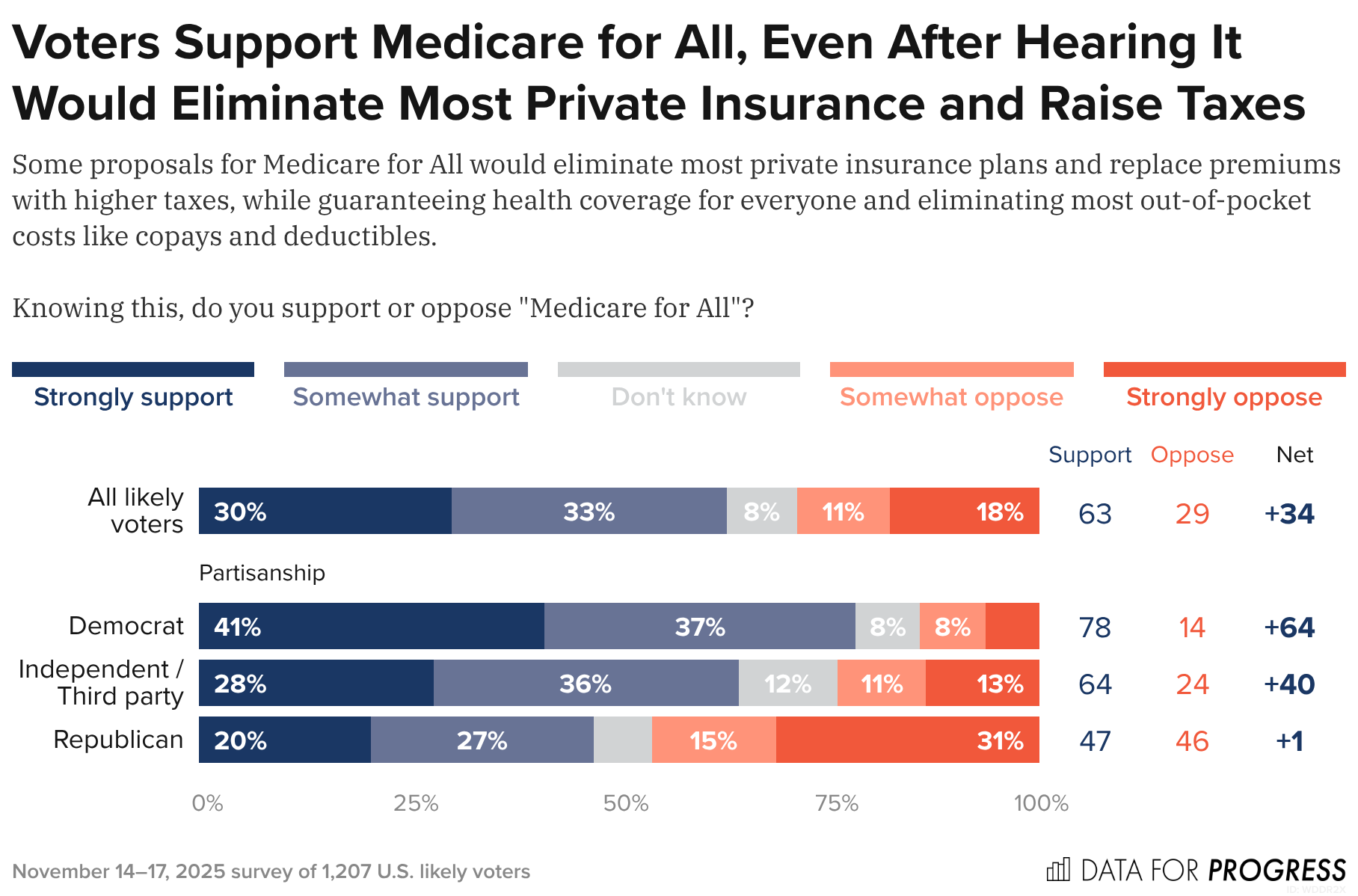
Americans are furious about their health care, and they have every right to be. Premiums and medical debt keep climbing, clinicians are burning out, and patients cannot get in to see anyone. So Medicare for All is back on the bumper stickers, popular with Democrats and even with some Republicans. The author sat down with a health policy professor and lawyer to split the slogan into three concrete questions.
The money is already going in
The first question is always where the money comes from. The answer is yes. The U.S. spends more on health care than anyone else, private insurance drives the highest costs, and most experts think a single-payer system would actually lower total spending. The hard part is not the total but the financing: avoiding debt means new taxes, and that is a tough sell even when you tell people the money is currently going to insurers instead.
Add it all up, though, and about 70 percent of the U.S. health care system is already funded by taxpayers. The argument is not whether public money should pay for care. It is how.
'Medicare' is a misleading name
Since the 2000s, Medicare has been split between the traditional government program and Medicare Advantage. Advantage plans throw in drug, dental and vision coverage, but that privatisation costs taxpayers an extra 100 billion dollars a year. Seniors who stay in the traditional program have to buy private coverage on the side.
Medicare has other flaws: it overpays specialists, subsidises large hospital chains, and hands drug price negotiation to private plans and pharmacy benefit managers. Medicare for All envisions a single plan with no extra fees and no private insurance, which is a far bigger change than just expanding today's Medicare.
What actually makes it expensive
U.S. health policy has long blamed fee-for-service billing for overuse, and answered with high deductibles, hospital and insurer consolidation, and prior authorisation. But Americans do not use more care than people in other rich countries, and in primary care they may use too little. What really drives costs is the price of care itself, the billing and insurance overhead, and expensive drugs and treatments that add little benefit.
Medicare for All would skip the rationing of use and go straight at prices and administrative bloat. That is a completely different approach.
It also has an underdiscussed upside. Large hospital chains and private equity rollups can charge insurers more than small practices can, not because they deliver better care, and that advantage forces small clinics to sell out. Give everyone the same government insurance at the same set prices and the advantage disappears. Independent clinics could survive, and providers would compete on quality.
As for waiting, the reality is that Americans already have the worst access to care among ten peer nations. Medicaid pays so little that many doctors will not take it, 27 million people are uninsured, rural hospitals cannot stay open, and high deductibles keep even insured people away from care. Rising employer premiums are a flat, regressive tax that eats disproportionately into lower-income wages.
Medicare for All would fix coverage, but it is only one piece of the puzzle. Primary care shortages, medical school debt and the financialisation of the whole system are untouched by it.
The last layer is rarely mentioned: it creates a mechanism for deciding priorities democratically, letting voters weigh how much goes to health care versus poverty and education.
Why it matters
The debate shifts once you see that public money already funds most of American health care. What remains is who gets to set prices and who collects the overhead—a question that tells you whether a reform is actually attacking costs or just changing who writes the cheque.



Curated from high-quality sources, with concise summaries and key takeaways.

