The Tokugawa shogunate's isolation was not timid conservatism but a deliberate system built after centuries of civil war to kill the conditions for another one.
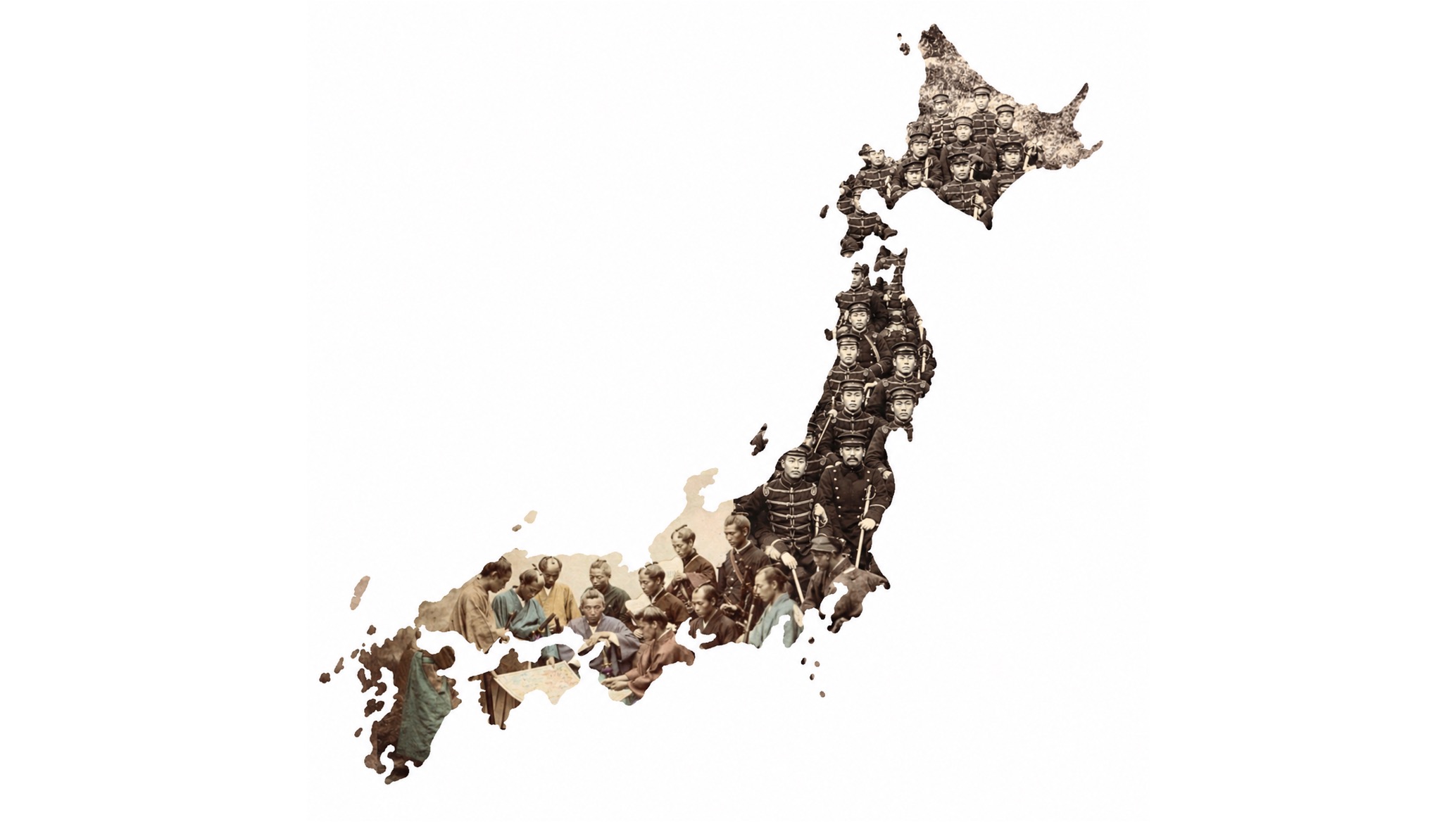
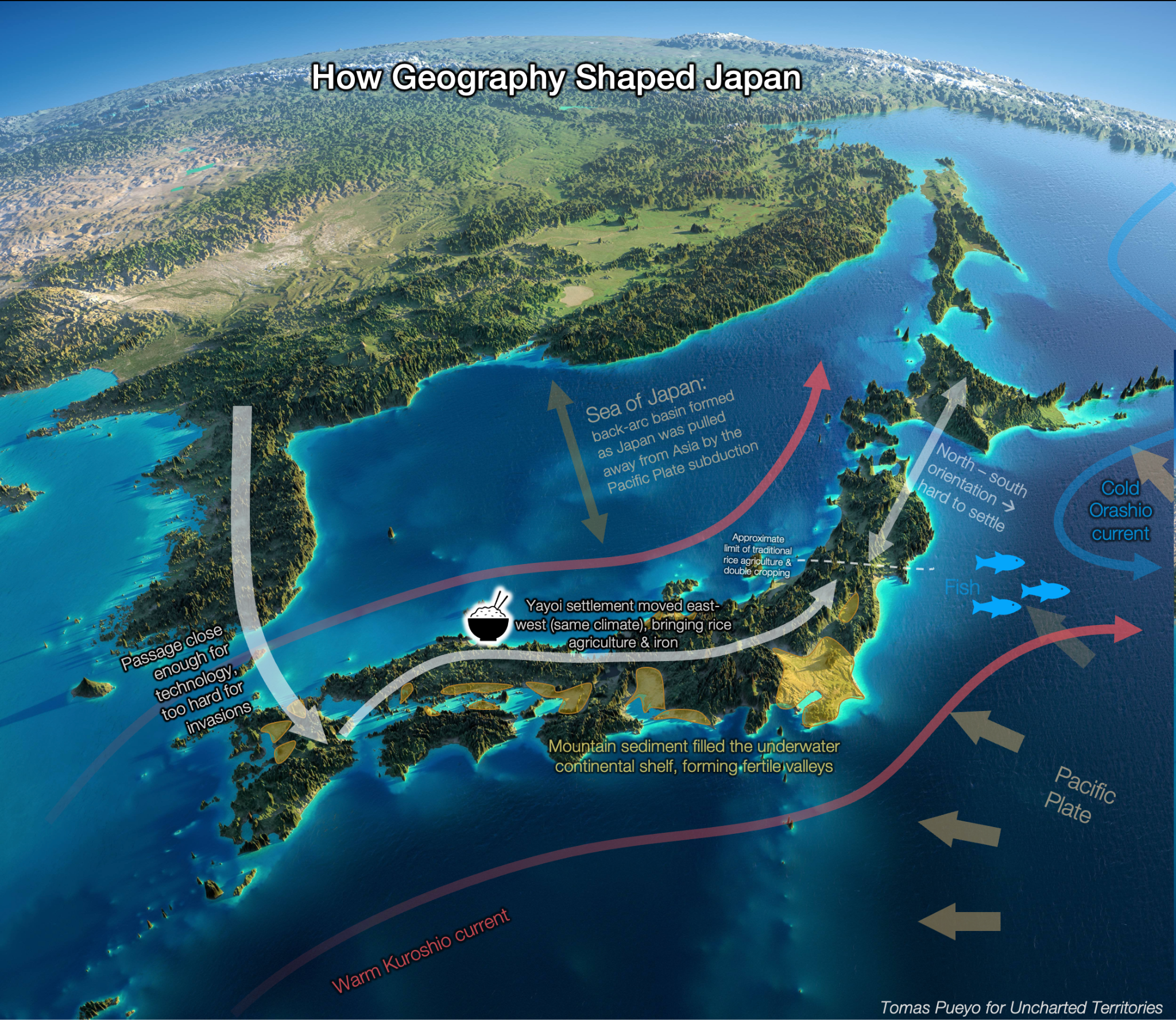
Mountains chop Japan's flat land into scattered pockets. In 1700 it took fifteen days to walk from Kyoto to Tokyo, and armies moved slower than that. Officials in the capital had no idea how much rice a given village had harvested. The local lord rode past the paddies and could count. He reported a low figure, pocketed the difference, and grew richer as the centre grew poorer. That is Japanese feudalism in one image.
The terrain looks a lot like Europe's, and it produced the same result: as Rome's central power collapsed, taxing knights emerged; as Japan's central power collapsed, taxing samurai did. Both rode horses, because horses were ruinously expensive.
Gunpowder made unification inevitable
Portuguese traders brought firearms in the 16th century. Training a samurai took a lifetime; training a farmer with a gun took a few weeks. Suddenly the crowded plains could field real armies, and silver mines paid for them. By around 1600 a handful of great lords had welded Japan into one piece.
What the winners did next is the best part. They did not go conquer anyone. They turned around and dismantled the feudal structure under their own feet: lords were forced to tear down their castles, marriages between them needed approval, farmers handed in their weapons. Gunmakers were concentrated in one place and paid a stipend whether they sold anything or not. With no wars to fight, mounted archery became a hobby and the skills died out generation by generation.
When conquering stopped working, they closed the door
Veterans with no war to fight were dangerous to keep at home, so someone proposed invading Korea. The land campaign went well; one naval battle lost half the fleet, and the whole thing was abandoned when the leader died. Diplomacy went no better, so Japan sealed itself off: leaving the country was a capital crime, entering it was a capital crime, and only Nagasaki stayed open, for Dutch and Chinese trade. The peace lasted 250 years.
Then in 1853 Commodore Perry's steamships sailed into Edo Bay. A shogunate that had not fought a war in 250 years was exposed overnight. Japan split in two, the south-western lords who had been dealing in Western guns seized the emperor, and within decades the country had Westernised wholesale and beaten China and Russia.
Geography wrote the opening. The rest was chosen.
Why it matters
Treating geography as an explanation slides easily into 'it was all inevitable.' Here the isolation was a calculated choice by rulers who had done the arithmetic, and so was the later expansion: from Korea to Manchuria, every step came with the argument that one more move would make things safer. A map explains motives. It does not explain why those motives lost.


Curated from high-quality sources, with concise summaries and key takeaways.

