A right-wing podcast has framed Indian Americans as a 'question' to be solved; the author argues that such attacks strengthen ethnic identity and make assimilation harder, not easier.
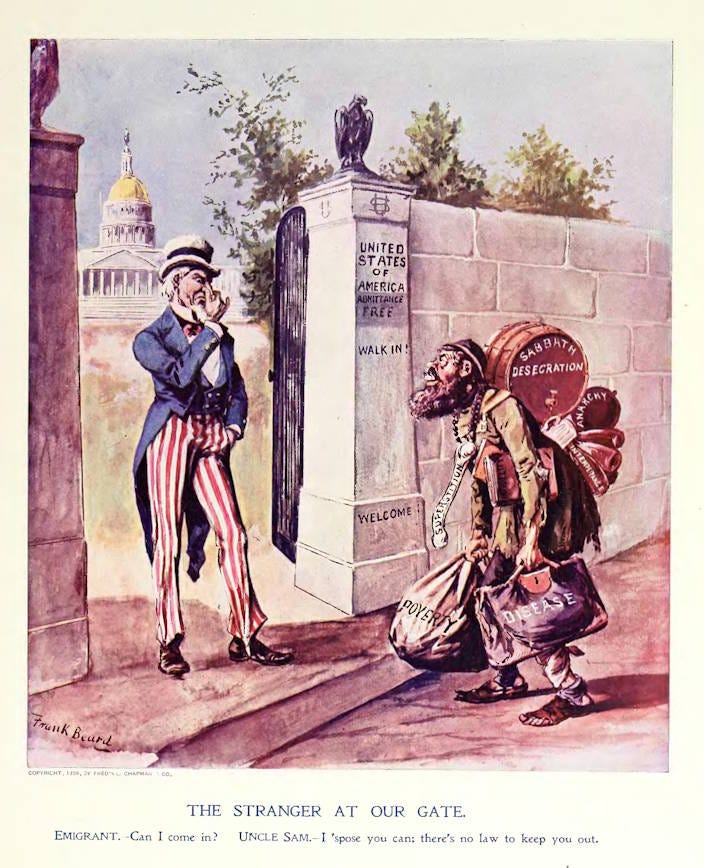
Chris Rufo of the Manhattan Institute and the right-wing podcaster Jonathan Keeperman put out an episode titled 'The Indian Question.' The name borrows from Europe's historical 'Jewish Question,' which should tell you something.
What they say they are worried about
Keeperman's argument is that immigration is stoking ethnic conflict in America because newer immigrant groups like Indians are not blending in the way earlier waves did. He wants assimilation, but thinks it only happens when the majority applies aggressive pressure — the way German Americans were pushed to change their names and stop speaking German during World War I.
The author went on his podcast to debate him in person, and made the opposite case: ethnic identity is defensive. When people feel shut out of the big gang, they turn to a smaller one. The harder they are pushed away, the closer they pull toward their own group.
The surveys back this up. Immigrants identify more with their ethnicity in the first generation, and by the third generation lean heavily toward 'American.' But by 2024, US-born Indian Americans were more likely than in 2020 to call themselves 'more Indian.' The author's guess: not the internet, but a direct reaction to anti-Indian rhetoric on the MAGA right.
Who actually built the 'American' identity
There was a twentieth-century project to forge an 'American' ethnicity — from Roosevelt and Truman through Johnson. A song called 'Ballad for Americans' was performed at the 1940 Republican convention, listing Irish, Jewish, Italian, Chinese and Polish, and then declaring them all American.
That effort failed for Black Americans, but partly succeeded for Asian, Hispanic and Middle Eastern Americans. Today's right, the author says, offers only perpetual fragmentation and suspicion — no interest in building a new people at all.
The real question was never an 'Indian Question.' It is what kind of nation America wants to be. Forcing people to bow their heads only pushes them away, and a big tent always works better than a small one.
Why it matters
Assimilation does not come from pressure. When a senior fellow at a national think tank describes your community as a 'question,' the natural response is to seek protection in your own circle — and the more exclusionary the rhetoric, the stronger the identity it was meant to dissolve.


Curated from high-quality sources, with concise summaries and key takeaways.

