A US surrogate refused to terminate a pregnancy with a severe heart defect, moved to a state that bans abortion, and ended up with no rights to the baby after the Supreme Court declined to hear her case.
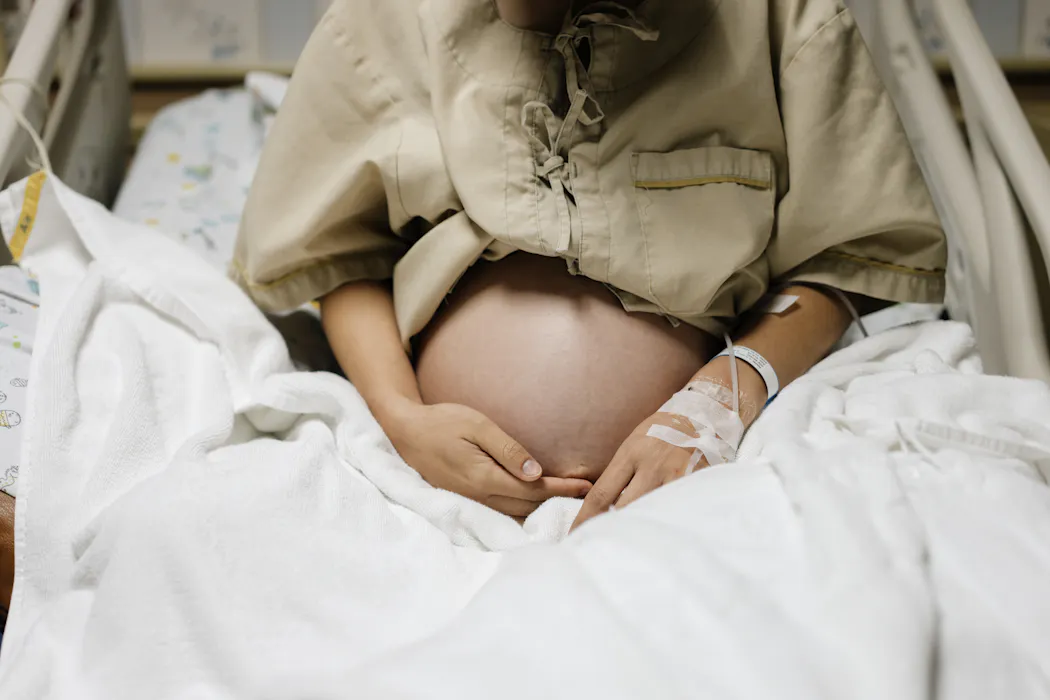
Surrogacy is millennia old, and the modern contract is half a century old. It spells out parentage, abortion, medical instructions, insurance and expenses, with each side separately represented, and usually the terms are honoured.
In 2026, surrogate McKenna West refused the intended parents' request to abort after the fetus was diagnosed with a serious heart condition. The contract said there shall be a termination for fetal abnormality if the intended parents request it. She says letters from their lawyer, and her own former one, threatened six-figure penalties if she refused.
She changed states
West moved from Alaska to Texas, where she had family, believed the baby could get care after birth, and knew abortion is banned in almost all circumstances. The intended parents, who lived in California, obtained a court order making them the legal parents the moment the baby was born.
The Texas attorney general also obtained an order requiring lifesaving care, saying the intended parents had refused to agree to it. West sought custody, willing to drop her claims if they consented to treatment. Texas courts upheld their rights. She asked the Supreme Court to intervene so she could learn about the child she carried for 37 weeks. The court declined. She has no rights to the baby.
Two earlier cases
In 2012, surrogate Crystal Kelley had a contract allowing the intended parents to call for an abortion in case of severe fetal abnormality. When a heart defect and other anomalies appeared, they asked her to terminate. She refused, left Connecticut for Michigan, which then treated her as the legal mother, and placed the baby for adoption.
In the 1988 Baby M case, the surrogate was also the genetic mother. New Jersey's Supreme Court voided the contract, holding she could not give up parental rights before birth. She was recognised as the legal mother, custody went to the father, and she later won visitation.
Where contracts run out
Abortion provisions have rarely been tested, and West's case did not settle whether they are enforceable. The question underneath is whether anyone can be forced to have an abortion.
After the 2022 Dobbs decision, states set their own abortion laws. In Texas, such clauses are unenforceable. But even where abortion is legal, a court would likely refuse to compel one, given bodily autonomy.
Protecting the fetus is different. If a doctor recommends a C-section for the fetus's sake and the surrogate refuses, a court might enforce a clause requiring her to cooperate with medical providers. Before 2022, some courts ordered C-sections against a pregnant person's wishes.
Bodily autonomy has never been absolute for pregnant people. After Dobbs, fetal-personhood theory, which holds that an unborn fetus has the same legal rights as a born human, is being turned against surrogacy itself. A Florida judge questioned its constitutionality; the state's attorney general called a surrogacy contract a violation of the 13th Amendment.
To some, surrogacy is baby selling. To others, it is how people build families and earn a living. The law is asked to honour both, and Dobbs has made that balance harder to hold.
Why it matters
Surrogacy's legitimacy rests on both sides consenting freely. West's case shows that premise was always shaky: a pregnant body was never entirely its own under the law, and the gap between contraception and abortion rights opens first on the surrogate.


Curated from high-quality sources, with concise summaries and key takeaways.

