A Columbia team used cryo-electron microscopy to capture the temporary portal a malaria parasite opens in a red blood cell's membrane, showing how it punches in and seals up without a trace.
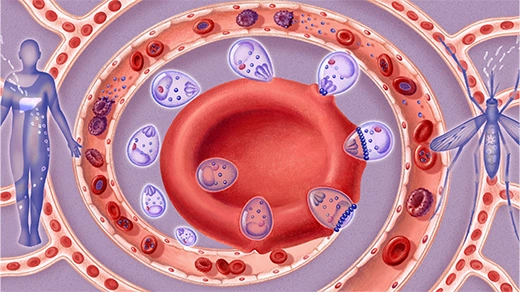
When Plasmodium invades a red blood cell, it opens a ring-shaped door in the membrane. The door stays open for less than a minute and closes behind it without a trace. Scientists have studied that door for nearly fifty years without seeing what it looks like.
Chi-Min Ho's lab at Columbia caught it with cryo-electron microscopy. The parasite inserts four proteins into the host membrane, and their electrostatic forces and pressure reverse the membrane's curvature so it can slip through. A parasitologist not involved in the work said this is no longer molecular biology; it is biophysics.
What I find more interesting is that the team also designed a protein that blocks the door in a test tube. The window is about sixty seconds, so any drug would have to act extremely fast.


Curated from high-quality sources, with concise summaries and key takeaways.

