High-energy neutrons from fusion can rearrange atomic nuclei into new isotopes, and the supply of the medical ones the world relies on is dangerously fragile.
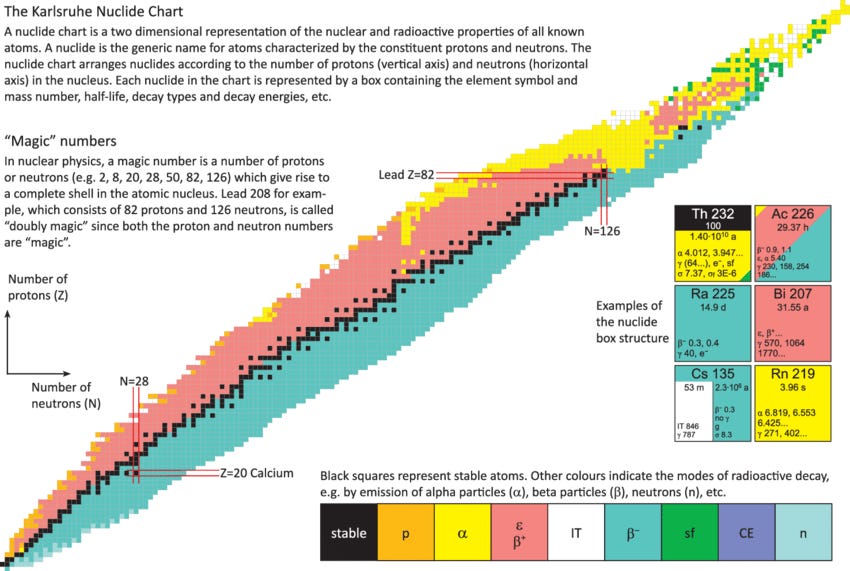
Chemistry only shuffles the outer electrons of atoms; isotopes change the nucleus itself. Alter the neutron count and you get a new version of the same element; alter the proton count and you get a different element entirely. The hard part is making them: a particle accelerator costs millions and produces a grain of sand's worth of material per hour.
That is why medical isotopes are so expensive. Only a handful of reactors worldwide can make molybdenum-99, and when some went offline for repairs in 2024, the world ran short.
The piece argues fusion could be the answer: its neutrons are high-energy, and the reaction could also generate power, so selling electricity could help pay for the plant. What surprised me most is the field it might open up. Isotopically pure silicon is useful for quantum computers, and much about such materials is still unknown, simply because they have always been too expensive to make.
Curated from high-quality sources, with concise summaries and key takeaways.

