Plasma screens began in the 1960s as a way to save memory, but weaker brightness and efficiency, plus yields that never improved, ended production by the 2010s.
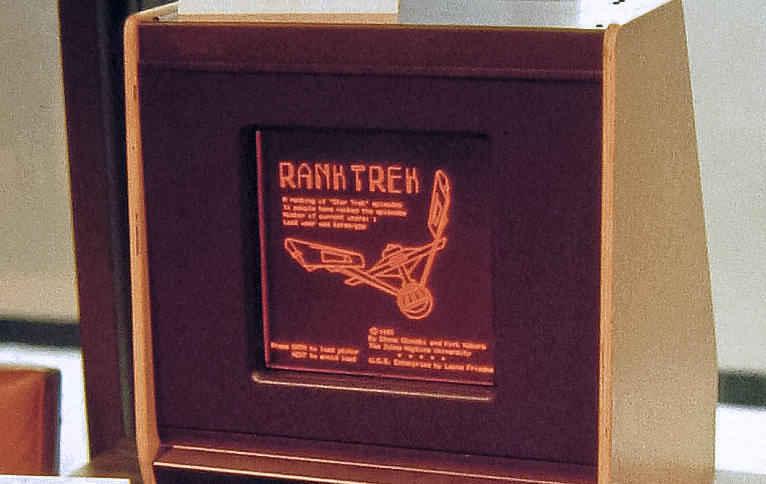
In 1960 the University of Illinois built PLATO, a teaching system that would eventually link thousands of terminals to a mainframe. The screen was the bottleneck: a television set repainted itself thirty times a second from an electron beam, so every terminal would need its own high-bandwidth video feed and its own expensive memory.
A screen that remembers the picture
The researchers wanted a display with built-in memory, one that redrew only what changed. The idea was to run current through a low-pressure gas until it glowed. Neon signs had done this for decades; nobody had turned it into a computer display.
A single-pixel model came in 1962, and it leaked, burned out and glowed unevenly. In 1964 the team moved the electrodes outside the glass, which removed the need for a separate resistor on every pixel, and a bit of stray air gave them the memory effect: the gas kept glowing after the voltage dropped. A 128 by 128 panel followed in 1968, and in 1971 the glassmaker Owens-Illinois shipped the first commercial plasma display.
But the memory argument soon evaporated: IBM was developing DRAM, and memory was getting cheaper every generation. Plasma's remaining edge was thinness and ruggedness, and it cost more power, more heat and a higher price.
Lost in the fab, not the showroom
Liquid crystals grew up alongside it, first in calculators and portable TVs. Plasma retreated to large televisions: Fujitsu showed a 31-inch set in 1990, Samsung a 102-inch one in 2005. But LCD caught up in size by the early 2000s.
By 2006 reviewers rated the two roughly equal, and LCD was already outselling plasma by a wide margin. The fatal problem was manufacturing: plasma yields and costs never came down, most likely because the industry put its money into LCD lines instead. By 2013 plasma had lost nearly all its share, and the factories shut down.
People who prefer the look of plasma still exist. They could not keep a production line alive.
Why it matters
It shows that a technology rarely dies because it suddenly stops working. Once two routes reach similar picture quality, the winner is whoever gets yields up and capital committed to a fab first. Buyers remember the specs; the factory decides who survives.

Curated from high-quality sources, with concise summaries and key takeaways.

