Sunday, 1 November 2026
Dozens of blogs and magazines, read for you every morning — the few worth talking about

The twelve stained-glass windows of the Església Santa Margalida (Santa Margalida, Majorca, Spain) depicting twelve saints. Today is All Saints' Day.
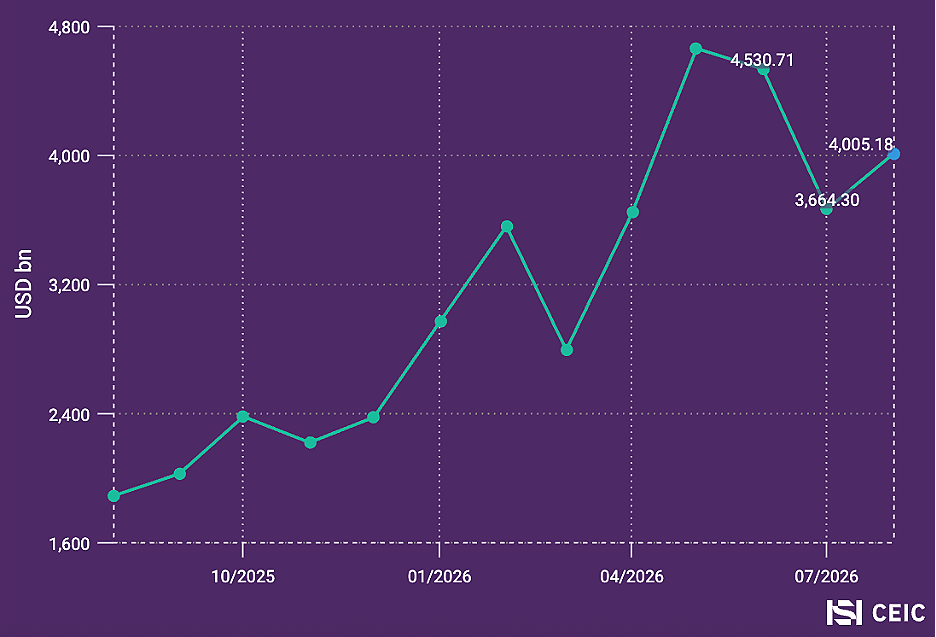
South Korea's stock market soared and crashed on the same two memory-chip companies, exposing how fragile the global AI investment chain is inside ordinary people's brokerage accounts.
The US Copyright Office has taken a clear side: copyright protects only human authorship, so a monkey's selfie does not qualify and neither does an AI-generated image. The prompt itself can be copyrighted, as long as it carries some spark of creativity.
The absurd consequence: spend a month refining a prompt and burn 200,000 gallons of diesel, and the resulting image is in the public domain for anyone to take. Companies that want to protect their commercial interests will have to log every word and pixel, tracking what the AI produced and what humans edited, much like the old copyright registration forms.
After a long detour, the formalities that the Berne Convention abolished are being reinvented as internal corporate process.

The influencer Libs of TikTok posted that post offices in Minnesota were 'inside mosques,' implying mail-in ballots were compromised. Someone proposed a Community Note to set the record straight, linking to local news reports, but the note never appeared.
X now lets an AI agent powered by Grok write notes, and output has risen. On political topics, though, users on the left and right simply cannot agree, so even AI-written notes rarely get approved.
What surprised me most was the ratio: one tracker found 93 percent of false claims about the midterms on X received no Community Note at all. X's own AI writers have not changed that.

He admits the $1B valuation is pure nonsense, a token picked to grab your attention. But the bet underneath is real: most of what clients pay a big agency for is nineteen layers of lossy routing, three weeks of sync calls, and a $400,000 invoice to change the typography on a slide deck.
The industry billed by the seat and the hour, so more people meant a bigger bill. AI collapses the marginal cost of drafting, formatting and resizing to almost nothing, leaving three jobs: working out what the client needs, finding an idea nobody has had, and judging what comes back.
What surprised me most is that he admits he still catches mistakes in agent output every day. Those mistakes are exactly what clients pay him to catch.

Ted Gioia wanted a record player, and his parents' condition was that he enter a public speaking contest for high schoolers. He won, got the turntable, and after that life kept pushing him onto stages.
He later told jokes to an audience more than twice his age, and in the next twenty-four hours people kept asking for a copy of his speech. There was no copy; he had stopped using a prepared text.
The line that stuck with me is that the audience really wants you to succeed.

“You can spend a month iteratively refining your prompt, consuming all your town's water along with 200,000 gallons of diesel and that prompt will be yours for your life plus 70 years, but the image it generates is in the public domain, and anyone can copy it, sell it or give it away.”
“The AI does not know what is happening on the ground unless a human has written it somewhere retrievable.”
“Most of what the corporate world calls scale is really just unoptimized human I/O friction.”
“I've never met anyone who went to an event hoping to be bored and disappointed.”

