South Korea's stock market soared and crashed on the same two memory-chip companies, exposing how fragile the global AI investment chain is inside ordinary people's brokerage accounts.
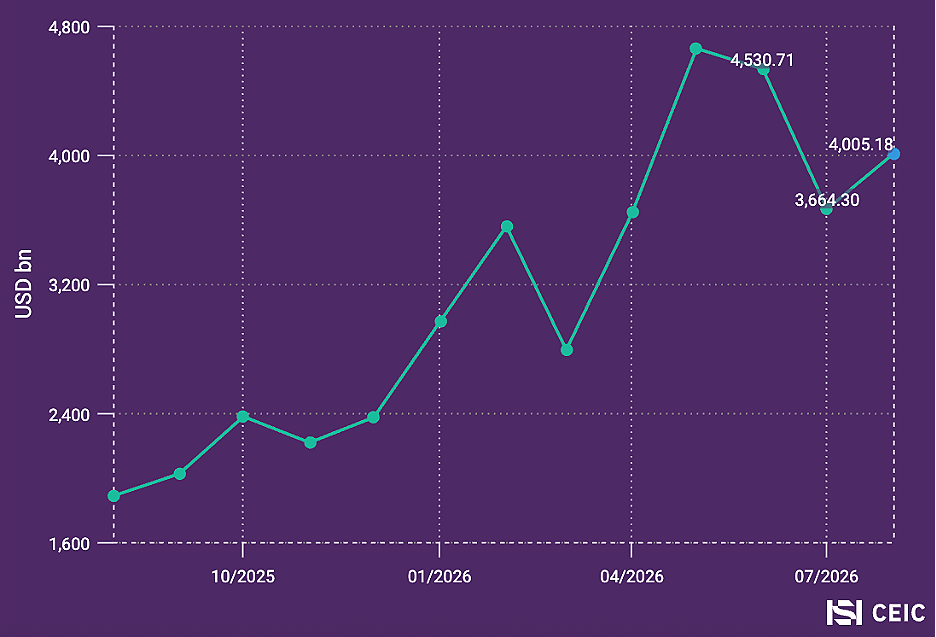
Start with a number: between June and July 2026, South Korea's KOSPI index fell by nearly a quarter, wiping out about $1.1 trillion in market value. Samsung and SK hynix alone account for more than half of the Korean market's total capitalisation.
One country, two stocks
The Korean market is essentially a bet on two memory-chip companies. From March 2025 to June 2026, the KOSPI rose 241%, adding more in market value than it had accumulated in its previous 43 years combined.
Together, SK hynix and Samsung hold 83% of the global high-bandwidth memory market — the fast storage stacked next to AI chips. The hotter AI gets, the more they earn, and the more the Korean market behaves like a leveraged chip stock.
Retail investors were invited to the table
In May 2026, Korea listed a batch of leveraged ETFs tied to single stocks — funds that borrow to magnify gains and losses. By June, trading in SK hynix, Samsung and their ETFs made up 84% of the entire Korean market's volume.
Then the market turned. On August 5, regulators suspended sales of these products and tripled the minimum deposit to about $20,000. But the retail investors who got margin calls — teachers, accountants, software engineers — were already out.
Korean stocks have long traded at a discount with international investors because of limited openness to foreign capital and weak corporate governance, known as the 'Korea discount'. The market never deepened; the leverage arrived first.
The next variable is in China
CXMT is China's state-backed memory champion. Its DRAM market share rose from 3% in early 2025 to 10% in the second quarter of 2026, and it has already produced fifth-generation HBM. It trails Samsung and SK hynix by two generations, but it is catching up.
If CXMT can push prices down, the margins of Samsung, SK hynix and Micron get squeezed. Those three are currently shut out of the Chinese market, while CXMT may be able to sell both at home and globally.
Korea's options are limited: restrict leveraged products and build up defence, chemicals and robotics to dilute chips' weight. But these are marginal efforts against a global tide of capital.
Whether AI technology succeeds and whether there is a financial shock along the way are two separate questions. Korea's trillion-dollar loss is a preview of the second.
Why it matters
The financial risk of the AI boom sits not with the model companies but in the parts of the supply chain that look safest: a national stock market can collapse because of two companies' inventory cycle, and the bill usually lands on the ordinary people who bought in last, on borrowed money.
Curated from high-quality sources, with concise summaries and key takeaways.

