Final results from the Dark Energy Survey, based on 758 nights and hundreds of millions of galaxies, deviate from the Lambda-CDM standard model at three sigma, hinting that dark energy may be weakening.
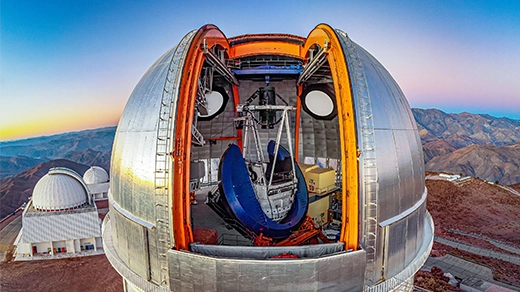
Cosmology has had a standard model for over twenty years: roughly 30% matter and 70% dark energy, with dark energy acting like a fixed property of the vacuum. The Dark Energy Survey (DES) used a 570-megapixel camera on a 4-metre telescope in Chile for 758 nights, pushing the number of recorded galaxies into the hundreds of millions.
The final 2026 analysis shows Lambda-CDM no longer fits all the data well. A theory in which dark energy weakens over time fits better, at a preference of three sigma. That is far short of the five sigma needed to claim a discovery, but one thing made researchers take notice: no single dataset can be tossed out to make the tension disappear.
Three sigma is not enough to announce a discovery, but it is enough to throw a field that was stable for twenty years back into confusion. What I am more curious about is this: if dark energy really does change, the people with the headache will not be the observers but the theorists who have to explain why it is so small and yet fades so slowly.



Curated from high-quality sources, with concise summaries and key takeaways.

