The RNA-world hypothesis holds that the earliest life came from self-copying RNA molecules that could mutate. Experiments show such self-replication is hard to sustain, until researchers found QT45, just 45 nucleotides long.
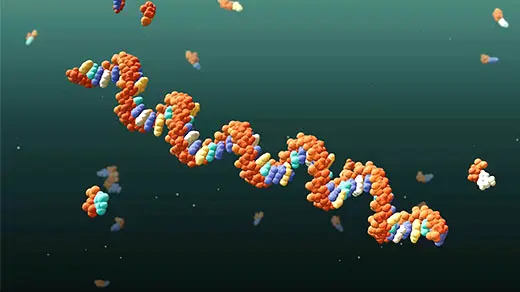
The origin of life runs into a chicken-and-egg problem: no DNA without proteins, no proteins without DNA. Ribozymes, discovered in the late 1980s, made RNA the compromise answer: it can both store genetic information and act as a catalyst.
But a 2019 experiment by Gerald Joyce's team poured cold water on it: when they let ribozymes evolve in the lab, the mutations introduced in each round tended to kill off the catalytic behaviour. The trouble is that those ribozymes were several hundred nucleotides long, while randomly assembled RNAs are only 10 to 15.
Then Philipp Holliger's team fished QT45 out of a pool of 10 trillion molecules: 45 nucleotides, yet able to seize another RNA strand and copy it. The jump from 15 to 45 is much smaller.
Still, the author warns that being able to copy is not the same as being alive; life also needs metabolism. What struck me most is that ratio: a few hits out of 10 trillion already counts as a pretty good hit rate.



Curated from high-quality sources, with concise summaries and key takeaways.

