TL;DR
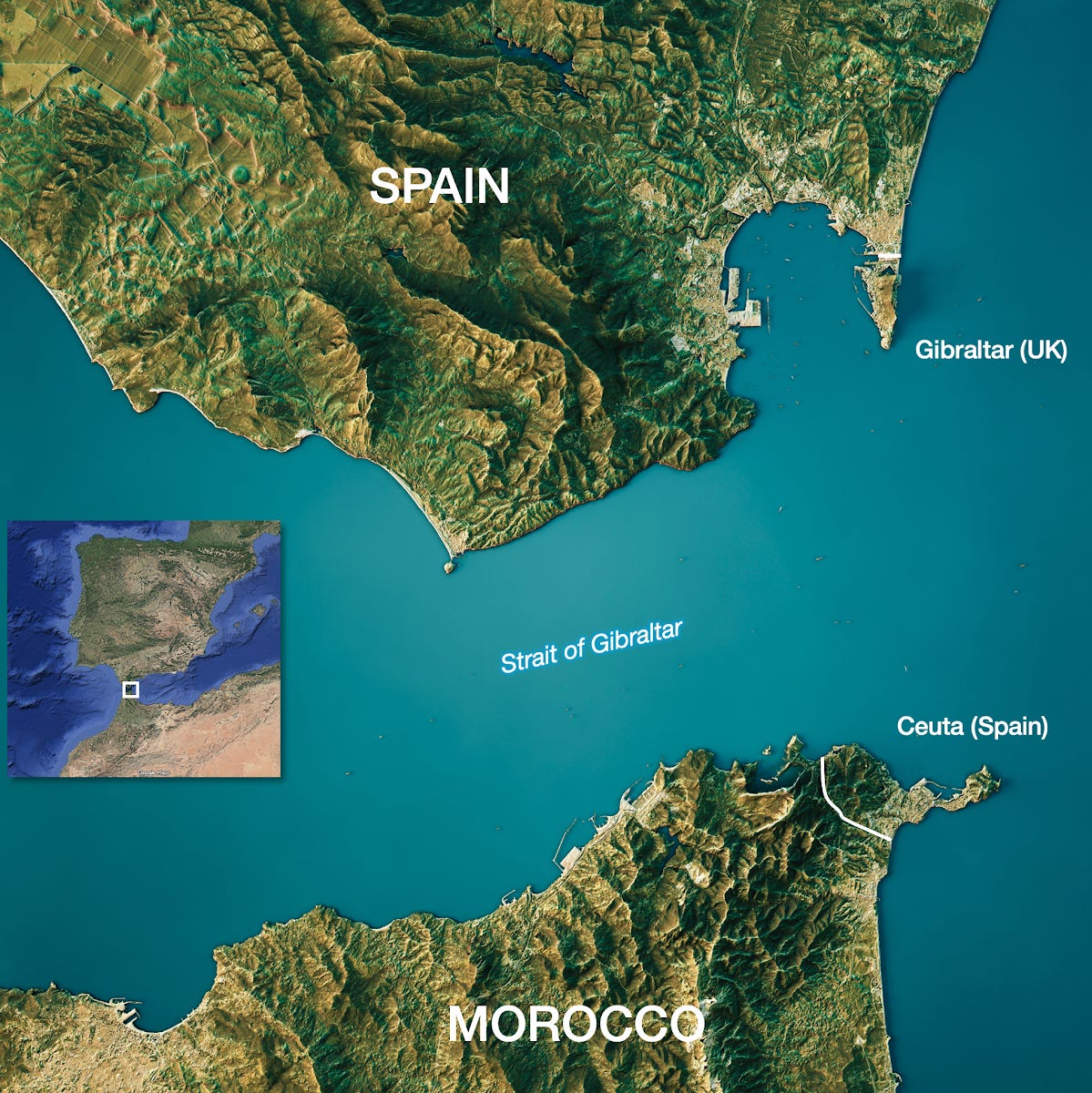
In July 2026, over 70,000 people surged from Morocco into Spain's enclave Ceuta after a court ruling clarified that swimming across the border wouldn't lead to instant deportation — and Morocco may have been happy to let it happen to pressure Spain.
On 30 July 2026, more than 70,000 people poured from Morocco into Ceuta, a Spanish enclave in North Africa that normally has only 84,000 residents. Most went back within days, but thousands remained and violence spiralled.
A court ruling set off a frenzy
Ceuta's border is heavily fortified because Spain's GDP per capita is six times Morocco's, and 25% of Moroccan men aged 15–24 are idle. Fence-climbers used to be sent back immediately, but a recent ruling changed the game:
In June 2026, Spain's Supreme Court decided that instant returns do not apply to swimmers. The news spread on social media, and thousands concluded that swimming in meant staying. They swam around the fence by the hundreds each day, until the numbers exploded.
Who was pushing?
Videos showed trucks carrying migrants toward the border, with Moroccan authorities sometimes watching and even waving them on. Morocco had done this before in 2021, letting 8,000 people cross to retaliate against Spain for hosting the leader of Western Sahara's independence movement.
Spain's intelligence service had warned that 180,000 people were preparing to enter. Morocco had every reason to let chaos unfold: it weakens Spain's hold on Ceuta, the strategic gateway to the Strait of Gibraltar, and strengthens Morocco's hand in negotiations.
Hstory and grey-zone tactics
Ceuta has been Hispanic for over 400 years; Morocco as a state is less than a century old. A 2023 Spanish academic report concluded that Morocco runs a 'grey zone' strategy to absorb the Spanish enclaves without conventional war.
Today's surge echoes the 1975 Green March, when Morocco sent 350,000 civilians into Western Sahara to force Spain out. The author concludes Morocco probably seized the moment rather than orchestrating it, since both countries have too much at stake to break ties completely.
Curated from high-quality sources, with concise summaries and key takeaways.

