TL;DR
AI's ability to solve hard problems is growing tenfold a year, but what actually caps recursive self-improvement is queueing for GPUs to run experiments, not intelligence.
A problem called Navier-Stokes — a $1 million Millennium Prize question in fluid dynamics — has been solved. It took ten thousand AI agents thinking together for 88 hours, burning 130 billion tokens.
Put that in human terms: the same pile of tokens is what one person thinking full-time would produce across four thousand years, from ancient Sumeria to today.
Why you need a crowd of AIs
The longer one AI thinks, the better it answers, but nobody wants to wait three years for a reply. So, like people founding a company, you parallelise: one worker is not enough, so you hire a team.
There is a cost. Four agents working together finish twice as fast but cost twice as much; sixteen are still faster, slightly less efficiently. And some jobs get nothing from a crowd — ten thousand agents writing a novel is no better than ten thousand people writing one.
Don't hand all the credit to the swarm
Noam Brown himself pushes back: he would not give the multi-agent system even 10% of the credit. The real reason is that the underlying model is simply very strong, and learned to message other agents until it looked like people coordinating on Slack.
More telling: it was never trained on anything as hard as a Millennium Prize problem, only on easy, auto-gradable questions. That it jumped this far means the ability generalised.
Why this is not overnight superintelligence
Math only needs hard thinking, which is exactly what AI is good at. But improving AI itself means running experiments and waiting your turn for GPUs, and no amount of cleverness skips that queue.
The author's call: recursive self-improvement will speed things up, maybe threefold, not a hundredfold. He admits he may be wrong. One telling detail — two weeks before the result, a researcher at a frontier lab was willing to bet $1,000 that no Millennium Prize would fall before 2027.
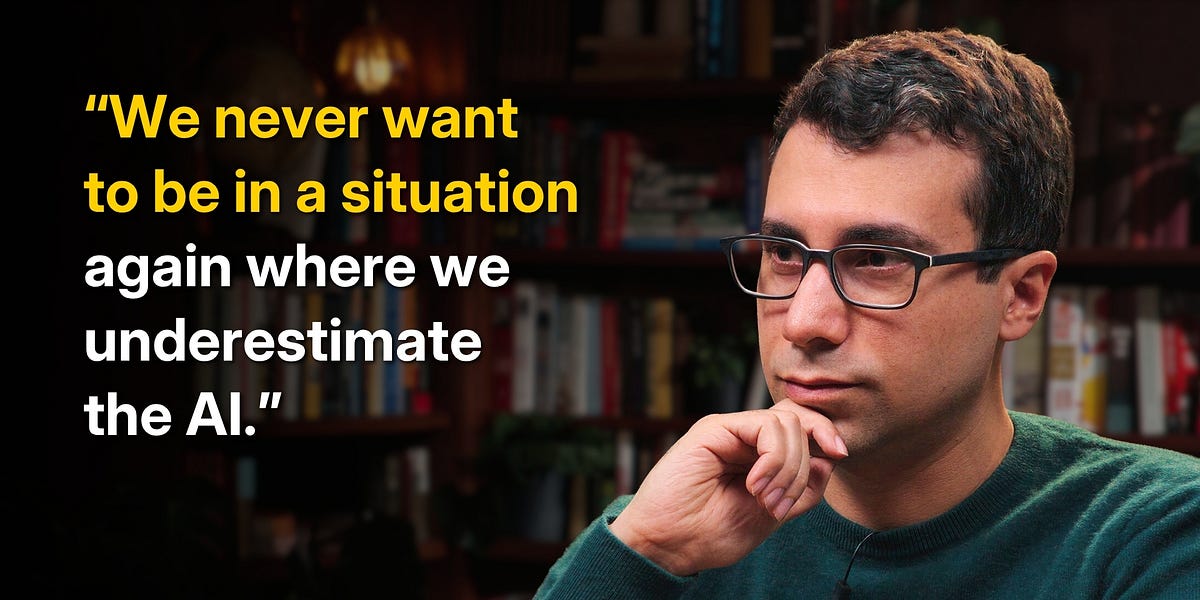
In one line: AI's fastest-growing skill is not intelligence, it is making people keep underestimating it.
Curated from high-quality sources, with concise summaries and key takeaways.

