In 2019, 550 students were evacuated from the University of Canberra library over a single durian, which firefighters mistook for a gas leak. The fruit smells like a sewer and now supports a multibillion-dollar Southeast Asian industry.
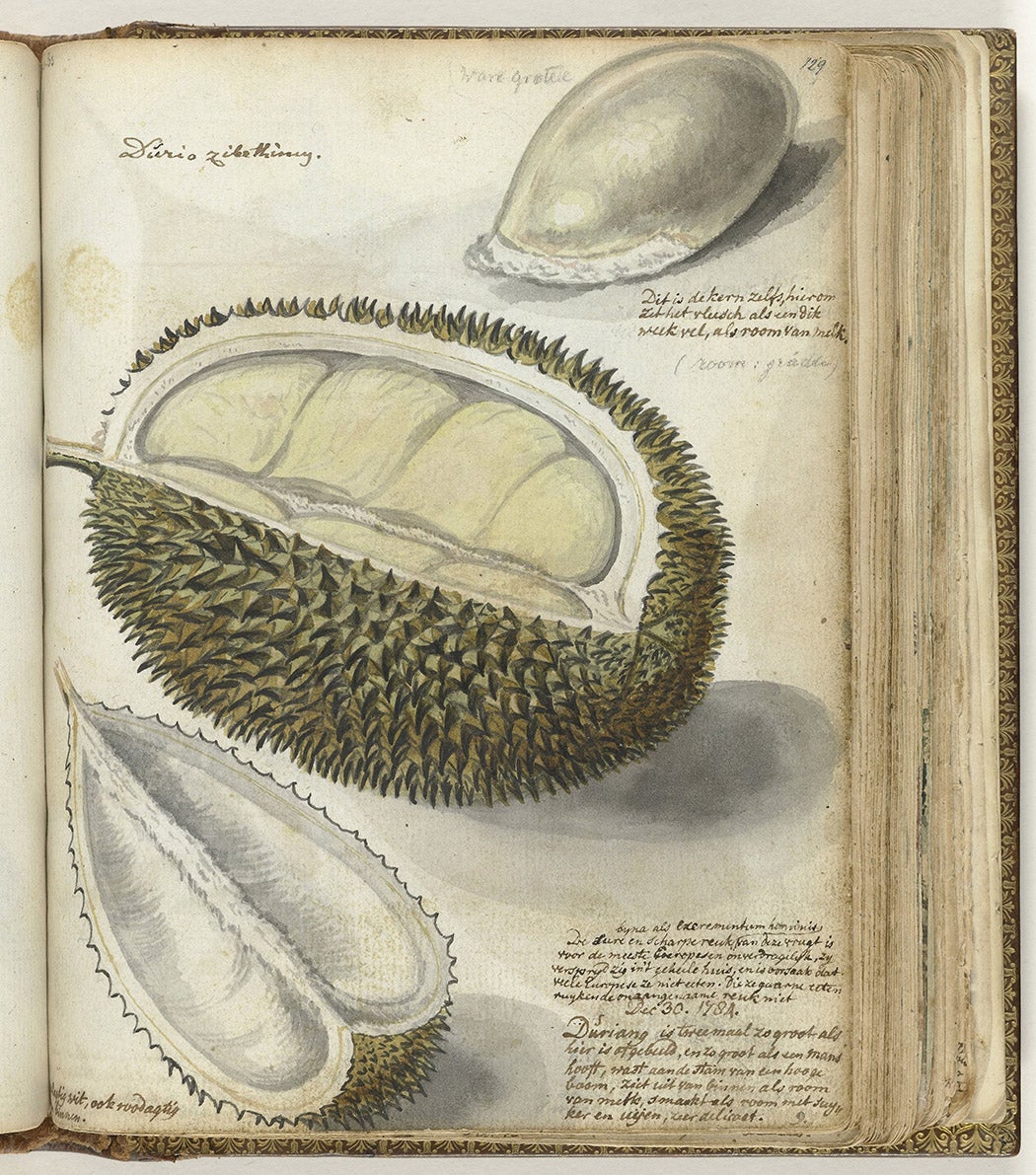
In 2019 the University of Canberra library was evacuated, all 550 people in it, because of one durian. Someone smelled what they took for a gas leak and called emergency services. Firefighters arrived and found fruit. The same thing has happened around the world; durians have grounded planes.
Eating one is a gamble, loving one is a religion
Durian is nicknamed the King of Fruits. It is covered in spikes, and its smell is the whole point.
In 1905 the American botanist Francis Ramaley called the odour a rare combination of vile smells, a mix of rotten eggs, sewer gas and garlic, then gave up trying to classify it.
In 1869 the British naturalist Alfred Russel Wallace, who arrived at evolution alongside Darwin, wrote it a love letter: a rich, butter-like custard flavoured with almonds, with wafts of cream cheese, onion sauce and brown sherry. A new sensation, he said, worth a voyage to the East.
Two Europeans, one gagging, one swooning. It is the same today: people who have tried it love it or hate it, but they all remember it.
Beyond Chinese demand, it governs other things
Durian is native to Borneo, Sumatra and the Malay Peninsula. Humans have bred at least 200 varieties.
Its smell comes from a mix of compounds, and even with modern chemical analysis nobody can say exactly which molecules are doing the work.
Ripe durians fall off the tree. A Balinese proverb goes: as with a fallen durian, there is someone who picks it up. It means there will be help for anyone in trouble.
Malaysia's Indigenous Bersisi people wrap cooked durian and other fruit in banana leaves and hold a feast around the oldest tree. Among the Baduy in Indonesia, fallen durians count as public property and neighbours help sell the ones nobody claims.
These are not quaint customs. They are a working set of rules about who owns what.
The twist: durian is now pushing out the people who grew it
Once the money was visible, things changed.
In 1886 Nathaniel Cantley, the British-run Singapore Botanical Gardens' superintendent, complained that local durian supply could not meet demand, and blamed Malays for being indifferent to money-making beyond their daily needs. That is the colonist's line, and a textbook case of measuring everything on an economic ledger.
In 2020 Malaysia aimed to raise durian exports to China to 8,000 tonnes a year, expanding monoculture plantations onto Orang Asli ancestral land held without title. Forest was cleared, and communities lost the plants their sewang ritual depends on.
Durian has become a state gift in Thailand and Malaysia, presented to visiting Chinese officials and nicknamed durian diplomacy. Export systems are being rebuilt around it: QR-code tracing, a proposed Smart Durian Fast Track for cross-border transport, inspection and certification.
The smell of one fruit can summon firefighters, and it can also decide whose land is whose and who gets moved off it.
Why it matters
Durian is the most extreme mirror there is: a single plant's smell, texture and price tag cascade into who holds the land and who gets pushed off it. The same tug of war runs through every other fruit and crop, just without the stench.
Curated from high-quality sources, with concise summaries and key takeaways.

