China is often described as either indifferent to AI risk or newly safety-conscious; the real bottleneck is that independent AI safety work there has almost no funding.
In San Francisco, Washington or London, worrying about AI for a living is a well-paid career. In China it is closer to a hobby.
A graduate who cares about AI risk is still expected to eventually get a 'real' job. In a country of 1.4 billion, the full-time positions can be counted on one hand.
Charity law keeps private money out
China has no shortage of rich people: Forbes counts 539 billionaires. The problem is how the money is allowed to move.
The 2016 Charity Law made nonprofits register, disclose finances and accept supervision, stating that charitable work shall be conducted under Party leadership. Private wealth was meant to fund education, health and poverty relief, not to become an independent political force.
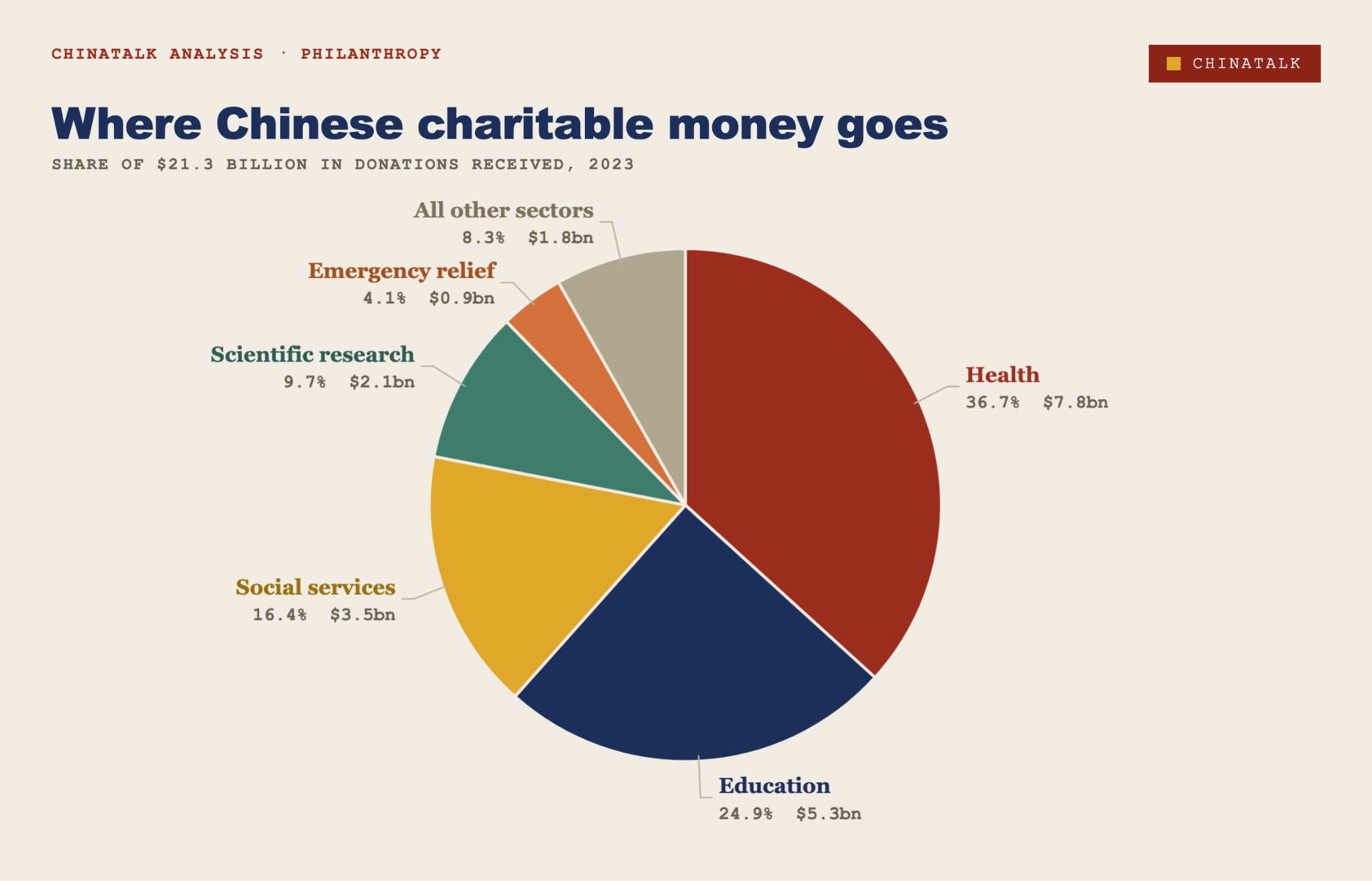
So in 2023 Chinese charitable giving came to about $21 billion, against $557 billion in the US, a 27-fold gap. Companies supplied 77% of Chinese donations and individuals just 22%; in the US it is the reverse.
The Overseas NGO Law of the same year matters even more. Foreign nonprofits must register an office or work through an approved Chinese partner, overseen by public security. Many Chinese nonprofits went from 80-90% foreign funding to 80-90% domestic.
Safety becomes the state's job
With philanthropy squeezed, AI safety in China is treated mostly as a government responsibility. Shanghai AI Lab, BAAI, CAICT and TC260 all make capabilities their main business; safety is one function competing for resources.
Universities carry the technical work. Chinese institutions published roughly 12 frontier safety papers a month in 2023, about 26 by mid-2025 and 57 by April 2026, nearly a fivefold rise in two years.
But the results that set the field's agenda, such as alignment faking, circuit tracing and the AI control paradigm, still come almost entirely from Silicon Valley. Frontier labs can afford dedicated teams; Chinese labs burn their compute just staying competitive on capabilities.
Then there are the 'safety-as-a-service' companies, bundling red-teaming and robustness testing into cybersecurity and compliance products. They only study the problems a customer will pay for.
What could be done
The Overseas NGO Law makes direct Western grantmaking hard, and money to state-linked bodies raises political and security worries. The author floats several options: safety-dedicated compute abroad, in Singapore; exchange programmes; investing rather than donating; or building a domestic Chinese safety fund.
Most of these are far-fetched. So is nearly every other proposal for global AI cooperation. What is needed is a Chinese safety ecosystem independent enough for new ideas to grow and resourced enough for talented people to spend careers on them, which takes cash.
Why it matters
Most debate about Chinese AI safety stalls on attitude, asking whether Beijing really fears the technology. The author replaces that with a budget line: about $1 billion a year in Western frontier AI safety philanthropy against roughly $20 million in China, a 50-fold gap. While that holds, no guess about official posture explains who gets to do the research.


Curated from high-quality sources, with concise summaries and key takeaways.

