Yan Lianke's two matchmaking attempts both failed, until word came that his father was dying and he boarded a train the same day to propose.
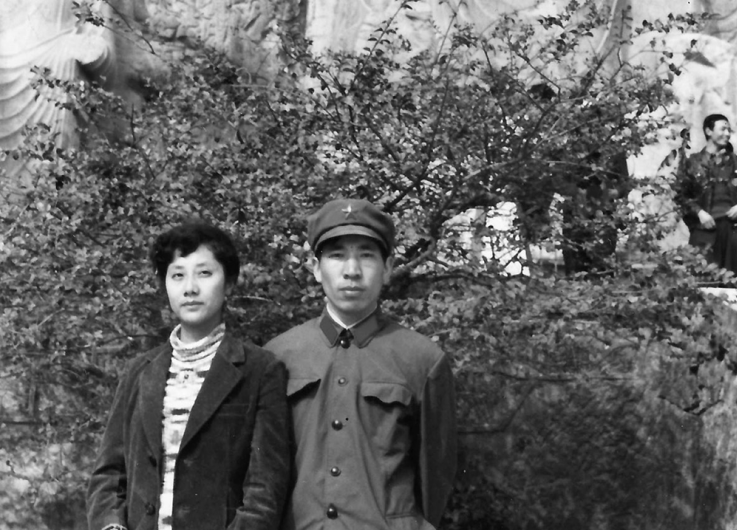
Yan Lianke was promoted to cadre rank in late 1982, and the next spring he went home to find a wife. Back then, if you were still unmarried at twenty-five, people said you had been left on the shelf. He had never once thought about what kind of person he wanted to marry, which struck him as asking whether planting or harvesting mattered more.
The first one crossed her legs
The whole family mobilised for the meeting. His sister cleaned the house, his mother went out early for pork, and his father was banished to the back courtyard so the girl would not find out he was ill. For Yan, this was a battle the family had to win.
The woman worked at a shop in town, with an urban hukou and grain supplied by the state. That made it a fairly even match. The matchmaker, an older cadre from the next town who read widely and published poems, said the two of them both loved literature and would have plenty to talk about.
She stepped over the threshold without shyness, sat down, ate the fried egg his mother hurriedly cooked, and rested one foot on the opposite knee, shaking it. Watching her, Yan thought this felt less like a matchmaking session than an inspection.
He tried mentioning that he had published stories. She asked loudly, so what? Her raised leg seemed to take up all the space in the room.
Later he wrote to her, and she replied half a month later. On his third letter he said that if she thought it would not work out, they could end it there. She replied immediately: you were the one who said it would not work out, not me. Thank you. It ended like a gust of wind across a field.
The second one took a second
One harvest season he was working the fields when a distant uncle arrived in a jeep, shouting for him to get in. The head of the county commerce bureau sat in the car, silent for dozens of kilometres before turning round to say: his father had sent word that he feared his son would be a bachelor for life. A girl at the Luoyang department store was willing to marry him, though she had never laid eyes on him.
He washed the field dirt off at a water pump and walked into Luoyang in a pair of worn flip-flops. The wide roads, the women cycling home from work, the children crossing hand in hand: a civilisation beckoning him.
Across the counter, the matchmaker pointed her out for one second. In less than a second, Yan decided to marry her. Her skin was a little tan, her face like ripe fruit, her eyes darting as she added up a customer's purchases. She looked familiar, and that made him believe in the mystical nature of marriage.
The uncle went to make the arrangements and took three hours to return, his face green, as if he had just been punched. He said: let's go, we can talk at home. At the edge of the wheat field he left one instruction — never mention this again.
His father could not wait
Around 1983, city girls had turned him down a few times. Then a friend introduced his future wife, a woman from Kaifeng, more beautiful and refined than any of the others. What gave him pause was that her parents wanted the couple to stay in Kaifeng, while the place he had always dreamed of settling was Luoyang. They both hesitated, and both silently accepted the other's hesitation.
In 1984 his brother called from home: their father was seriously ill. He had said that of his four children, three were married, and only the youngest was still alone. If Lianke could marry, then even if the cold took him from this world, he would go with a lighter heart.
The two brothers were quiet on the line for a long while. Finally his brother said: go talk it over with them, and if it is possible, get married. The click of the receiver sounded like a farmer driving his hoe into the soil at the end of the day.
He did not go back to the dormitory for his things. He walked out of the camp gate and headed for the train station. He was getting married. He would say to the woman who was equally hesitant: please marry me. It has to be this year. Fate has arranged it.
She braked at the mouth of the hutong
He reached Kaifeng at dusk and waited there for her to come home from work. Seeing him, she froze for a second and braked abruptly. Are you in town for business, she asked.
He told her his father was ill, that he wanted to get married, that it was all for his father's sake. They stood facing each other with her bicycle between them, ready to advance or retreat. He could not tell from her face whether she was shocked or uneasy. She said only that she needed to go home and talk it over with her parents, then walked away pushing the bicycle rather than riding it.
He had a meal that served as both lunch and dinner, queueing more than half an hour for it. When she came back she stood in the doorway looking for him, blushing, and said her parents had agreed — and that if his father died, his mother could come and live with them in the city. Then she turned and hurried off.
Looking down the narrow, mottled hutong, he wept, full of thanks for the fate that had brought them together. They married that National Day. That winter, just as he had foreseen, his father left the world. He has gained a great deal from the marriage. As for what she has gained or lost, she has never said a word.
Why it matters
Two failed matchmaking attempts and a same-day proposal lay out what marriage meant for a rural young man in the 1980s: not romance, but a ledger of hukou, wages, family standing and how much time a father had left. The novelist turned that ledger into an essay, and his wife has never said what she thought of it.

Curated from high-quality sources, with concise summaries and key takeaways.

