In September 2026, a rumour that OpenAI was about to announce a proof of the unique games conjecture pushed MIT professor Dor Minzer and two students to finish a seven-year paper in three days.
One text message broke a seven-year rhythm
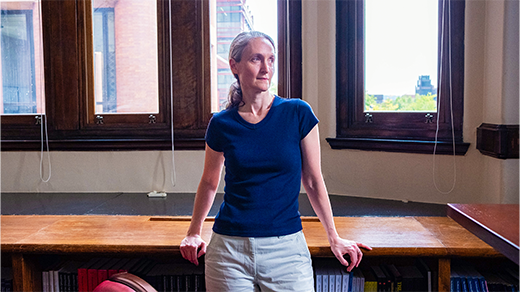
On the morning of 11 September 2026, Dor Minzer, a professor at MIT, got a text from a friend: are you close to proving the unique games conjecture? He assumed it was a joke.
More messages arrived, and a picture formed: OpenAI had supposedly proved it and might publish any day. The subtext was clear — if you have something, put it out now.
What the conjecture is betting on
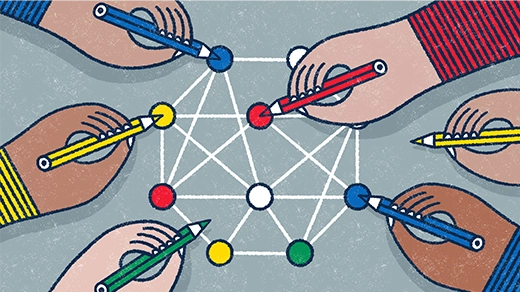
Satisfying many constraints at once is the heart of these problems. Think of seating a wedding: friends together, feuding guests apart, every table full.
The counterintuitive claim is that even if you abandon perfection and settle for satisfying 1% of the constraints, some cases remain unsolvable. If it holds, a crowd of seemingly unrelated problems gets locked down with it.
What Minzer actually advanced was its close relative, the 2-to-1 games problem. He tried and failed with Yumou Fei and Shuo Wang, first-year graduate students, five times over. Fei described it as forcing a circle and a triangle into the same jigsaw.
Filing before the press release
In April 2026 it worked. The paper should have taken months; with the rumour circulating, it took three days. A note on page one apologised: mathematically complete, but not the shape they wanted to share.
On 6 October OpenAI announced a proof of the unique games conjecture, plus 376 other results. Peers called Minzer's paper another truly great one.
What worries Minzer is not being scooped. Failing, and knowing why you failed, has value, he said. Using AI takes all of that out.
Why it matters
What AI is really pressing on is not compute but tempo: it swaps the academic habit of thinking first and publishing later for claiming the ground first and explaining afterwards. Judging a result may soon mean asking who was racing the clock and who was doing the work.

Curated from high-quality sources, with concise summaries and key takeaways.

