Apollo chief economist Torsten Slok warns that the AI thing had better work out, or there will be a problem — and working out requires trillions in spending with almost no room for error.
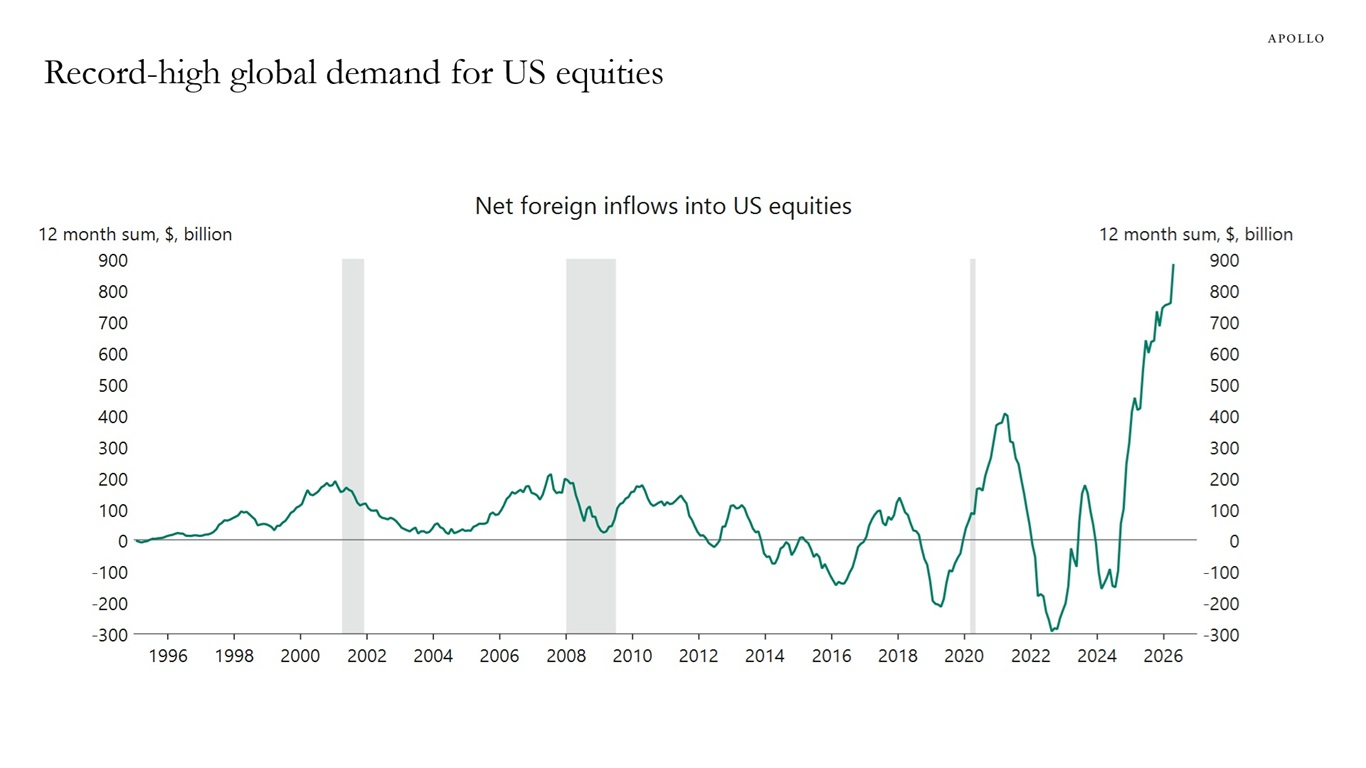
At the end of July, Apollo Global Management chief economist Torsten Slok gave the Washington Post a blunt warning: the AI thing had better work out, because if it doesn't, we're going to have a problem.
The market has bet everything on it
Nine companies — NVIDIA, Google, Amazon, Meta, Microsoft, Broadcom, Micron, AMD and CoreWeave — make up 46.5% of the NASDAQ 100. Swap in Oracle for CoreWeave and they are 28.9% of the S&P 500.
To hold those valuations, every one of them has to spend or earn hundreds of billions more each quarter, forever. The money can only come from selling more chips, or renting them out and building software on top.
Ordinary savers are on the table too
Per Goldman Sachs, retail investors directly own about 10% of the market, including 22.4% of NVIDIA's and 21.7% of Microsoft's traded stock. Corporate equities are 37.9% of US household wealth, the highest since 2000.
Retail exposure goes well beyond direct holdings, through index funds. Their direct AI-related holdings are worth about $4.65 trillion. Many of them use Robinhood, where a few taps can add leverage, short a stock or buy an event contract.
One crack in confidence and it all goes
On April 14, 2000, the NASDAQ fell 9.67% in a day. Today, a 20% drop across those nine AI stocks would match the worst day of the dot-com crash.
Worse, Amazon was reported to be taking delivery of about $3 billion of NVIDIA GPUs every month and warehousing them because it lacks power and space to install them. Gartner says compute capacity already exceeds demand, and that 80% of neoclouds will be gone by 2030.
Nomura estimates a gigawatt of data center is worth at most $60 billion, while Anthropic earns about $20 billion a year per gigawatt — a huge gap.
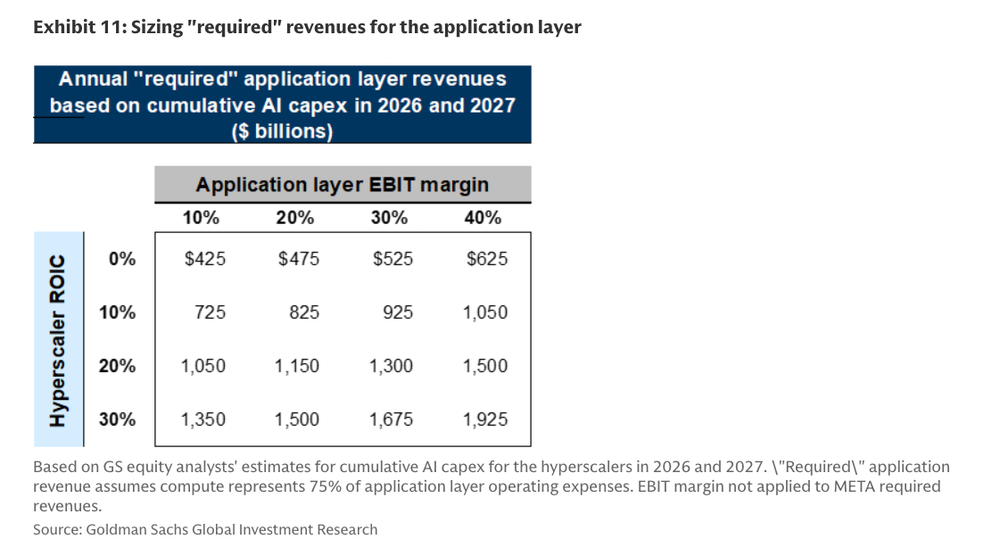
Tech analysts expect the sector's operating cash flow to rise by $1.2 trillion by 2028, but analysts covering its customers see nothing like that. Where the money comes from, nobody can answer.
Why it matters
The sharp edge of Slok's warning is that it turns AI from a technology question into a systemic financial one. With equities at a record share of household wealth and retail trading near the excesses of the zero-rate era, a popped AI bubble stops being bad news for tech and lands directly in ordinary retirement accounts.

Curated from high-quality sources, with concise summaries and key takeaways.

