Monday, 2 November 2026
Dozens of blogs and magazines, read for you every morning — the few worth talking about

Saint-Charles Cemetery is the largest cemetery in Quebec City. Today is All Souls' Day.
A new study of more than 10,000 adults and over a million hours of sleep data found that people whose sleep schedule shifts around had roughly a 20% higher risk of heart attack, stroke and heart failure.
The five biggest AI data-center companies will spend $900 billion this year, and AI investment may already exceed 8 percent of U.S. GDP. Meanwhile, profit margins for the rest of the S&P 500 are flat, and private construction outside tech is in free fall.
The piece borrows a historical parallel: when the Dutch found natural gas in the North Sea, the gas industry boomed and manufacturing withered. Today's AI, it argues, is like a parasite starving its host.
What unsettled me most is the ending: the only thing more destructive than the AI boom might be a crash.
Anthropic has filed for an IPO at an estimated $1.5 to $2 trillion. The piece does the arithmetic: even if it grows to Apple or Nvidia scale, that is only a 2 to 2.5x return for early investors; to match what Google delivered after its IPO it would have to be worth $200 to $260 trillion by the late 2040s, nearly half the wealth that exists in the world today.
The author borrows Buffett's idea of a moat. AI companies have long been said to have none: no network effect, little brand loyalty, easy switching, and OpenAI close behind. So he suspects what Anthropic is quietly betting on is intelligence itself, the ability to outsmart rivals at business.
I buy half of that, because if the moat really is cleverness, it is also the kind of moat that the next, cleverer thing fills in.
If Volta, an infostealer, gets into your computer, stealing the data is not the end of it: it has a large language model 'act like an intelligence analyst' and produce a citation-backed assessment of you.
The most absurd part is that it seems especially interested in younger users on Discord, Steam and Roblox. And the 'age verification' laws now spreading are busy compiling yet more permanent, breach-prone records on those same kids.
Data isn't the new oil, it's the new oily rag: the more you warehouse, the bigger the fire. That line sounds like a joke until you read this and feel the chill.

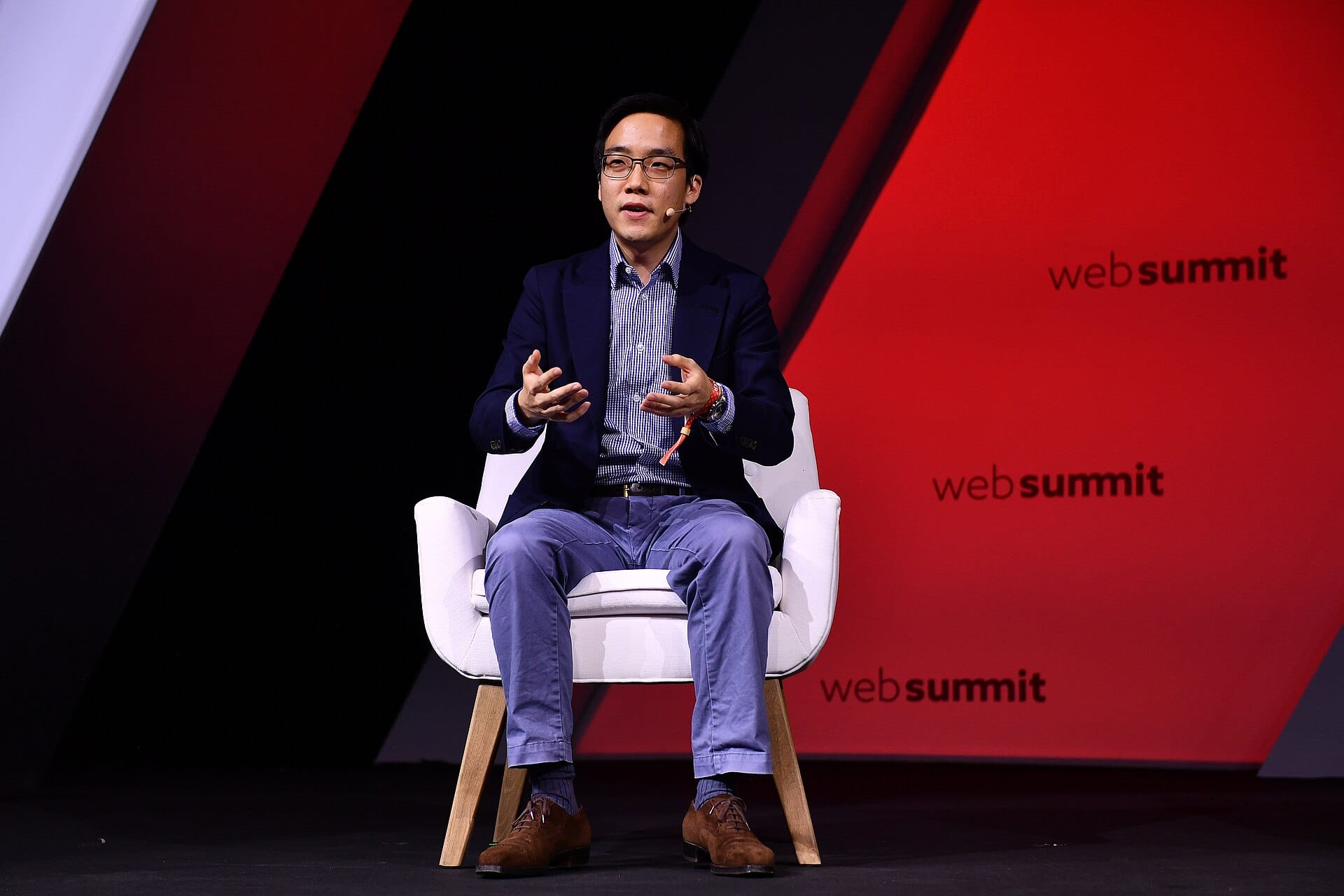
Proton CEO Andy Yen last Friday cancelled a round of 're-interviews' covering nearly the entire company. Under the plan, employees would have had to explain how they use AI, and using it too little could, in leadership's view, get them fired.
The trigger was a 404 Media investigation published on Thursday. In it, Yen wrote in the company's security Slack channel: 'Stop thinking always of how to be slower, and focus more on how to be faster.' The security team had merely suggested taking a few days to pentest new code before pushing it live.
Cancelling the re-interviews probably won't reassure users. What worries them more is Proton deprioritizing security, and some have already publicly called on social media for Yen to resign.
I am curious how a company that sells encrypted email ends up judging employees by how much AI they use.
One strand of social psychology has been built on a quiet assumption: that people bend to the situation, warmer toward a stranger after holding a hot coffee. The authors call this the empty-self metaphor.
The trouble is the evidence. In one review, only 17 per cent of social priming findings survived replication, and the authors' own work found that studies resting on the empty-self assumption were far less likely to hold up.
What I find more interesting is why the idea caught on: it lets you believe society could be set right by remaking the environment.
In the end I side with the authors: we are not as putty-like as those classic experiments suggested.

Men got an average of 11 out of 20 right, women 10, yet men consistently guessed they had scored higher regardless of the real result. Seeing those self-assessments, advisers recommended 44% of the men and 31% of the women for a more ambitious task.
The sharpest turn comes later: once advisers were told that women tend to underpromote themselves and men to overpromote, the recommendations flipped, to 47% women and 37% men.
The author does not want the script flipped, and I think that would just be a different unfairness. A more practical fix might be anonymising the scoring, so the adviser sees the result and not the gender.

A long essay translated by budongjing, reposted by Huxiu and read over 100,000 times, says that for two decades three engines of wealth creation—real estate, the internet and foreign trade—took turns driving prosperity. You did not need much talent, just courage and a willingness to grind. Now all three have slowed, and competition is zero-sum.
Drawing on Emad Mostaque's The Last Economy, the author frames the shift as China moving from arranging atoms to arranging bits: the old paradigm manufactured scarcity, while the new one favours open-source networks that reach exponential scale.
The argument is grand; for individuals it ends with advice to think like an independent network node. What I keep thinking about is a comment underneath: the cake has stopped growing, ordinary people have only their time to sell.

Chinese open models like DeepSeek are cheap and strong, and Western businesses want them but fear them, so a new business has appeared: editing the weights.
The most concrete finding comes from security firm CrowdStrike: prompts to DeepSeek's R1 on politically sensitive topics were up to 50% more likely to return code with severe security vulnerabilities.
Another firm, Lazarus AI, realigned Alibaba's Qwen using answers from Google's Gemini Flash, and says the models could then name sensitive activists not present in their training material, suggesting the knowledge had been there but suppressed.
That a few weight edits can swap a model's stance unsettles me a little: what does the model actually know?
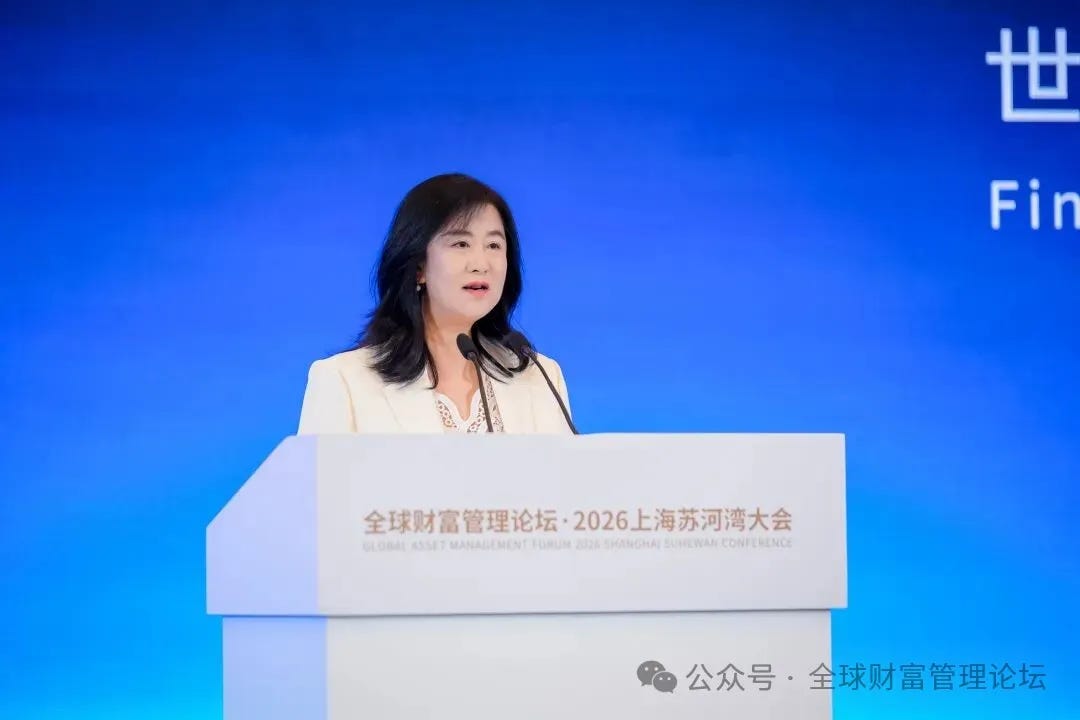
The renminbi is now the third most used currency for payments, but PBOC Deputy Governor Tao Ling says a smooth cycle of international use has yet to form: easy to obtain, convenient to use, suitable to hold long term — the three do not yet line up.
Among her remedies is a distinction worth pausing on: capital-account openness is not the same as convertibility. A transaction conducted entirely in renminbi involves no currency conversion at all, so what blocks it may simply be the cross-border movement of funds.
The renminbi ranks seventh among reserve currencies and carries a 12.28 per cent weight in the IMF's SDR basket. None of these numbers is small, but being willing to hold something for the long run has never been about share.
“The only thing more destructive than the AI boom might be a crash.”
“Data isn't the new oil. Data is the new oily rag: profitable only if you can warehouse it in vast quantities under unsafe conditions and have society pick up the bill for every conflagration.”
“There is considerable evidence for human consistency, agency and a remarkable propensity to shape our situations just as they shape us.”
“Women can be their own worst enemies by not promoting their work.”
“In the past, the cake grew ever larger. You could put forth effort and make money. Now the cake grows more slowly. The most lucrative returns are captured by a select few who possess resources and assets that can be monetized repeatedly. Ordinary people have only their time to sell.”
“We're not making the model anti-Chinese. We are bringing it up to speed on safety and to the standard of mainstream Western AI.”

