Japan was the only non-Western country to industrialise in the 1800s, helped by geography that made it safe and rich; decades later that same inheritance became the thing holding it back.
In 1900, eight powers marched on Beijing to put down the Boxer Rebellion. Seven were European empires. The eighth was Japan. A non-Western country keeping step with seven industrial powers was startling in itself.
Industrialising takes a whole checklist
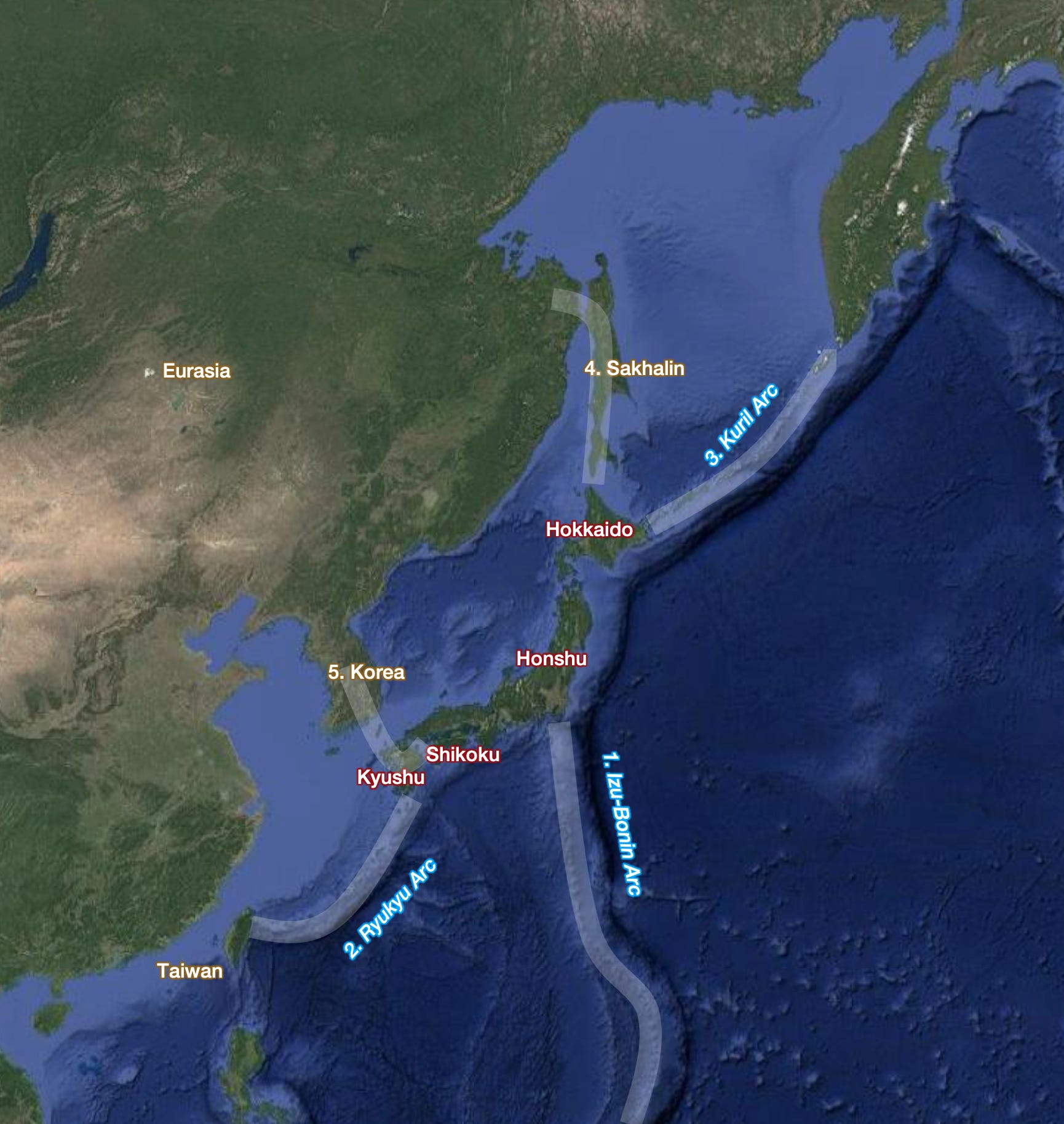
You need a food surplus, light industry, cities, workers who can be pulled into factories, fast transport and a literate population. By the 1850s Japan had every item. Its mountains and scattered plains pushed people into towns and trade; as a set of islands it moved goods by boat far more cheaply than by road.
After 250 years without a war, the samurai had put down the sword and picked up the pen, becoming administrators. The country was highly literate, and it had a ready-made civil service.
The Britain of Asia
Both Britain and Japan are islands — not too large, not too small — mountainous, with many valleys, close enough to the continent to copy its technology but safe enough to concentrate defence at sea. Farmers who expect to keep their harvest invest in the land. More output fed more people, and more people filled the cities.
Humiliated, then faster than anyone
The shogunate saw the threat and did not drag its feet. Each lord ran his own territory and could place his own bets, and in the end the whole political system was swapped out for a Western copy.
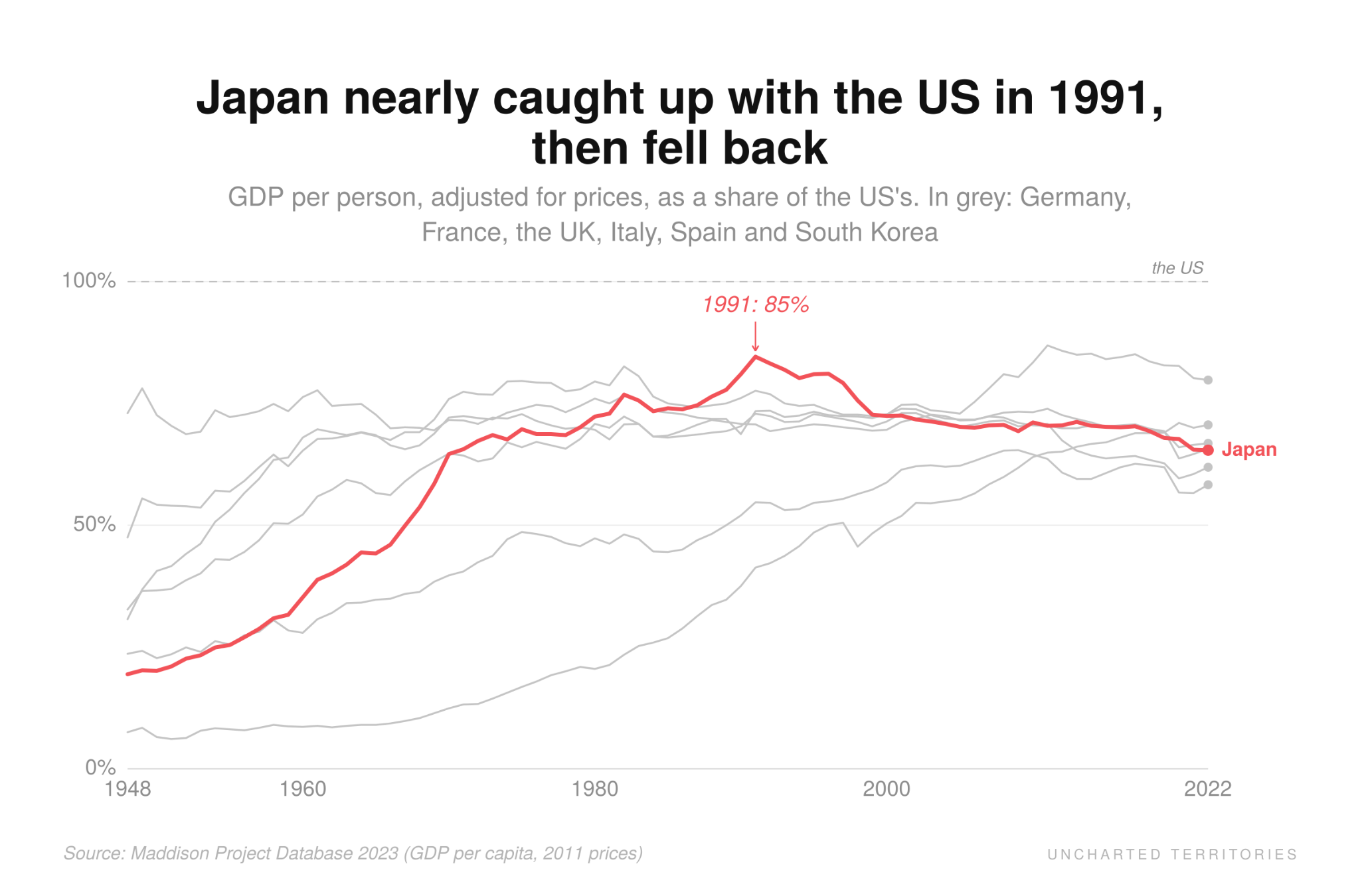
Later Japan built an empire, was flattened, climbed back to the world's second-largest economy, and then stalled. It stalled because the very things that had made it rich turned into baggage.
Why it matters
A country's sprint usually runs on an inheritance of geography and history, not on one clever decision. The hard part is never winning a round — it is noticing when the cards that won it have been played out, which applies to any economy that once had it easy.
Curated from high-quality sources, with concise summaries and key takeaways.

