In 1621 a Mayflower colonist was frightened off by two 'wolves' at Plymouth; historian Strother Roberts argues they were Native American dogs, and that the misidentification served a colonial story about who deserved the land.
In January 1621 the Mayflower colonist John Goodman was out walking near Plymouth when two large canines bounded up. His little spaniel panicked; he fended them off with a plank.
What is odd is that the two 'wolves' then sat on their tails, grinned at him for a while, and went on their way. Wolves, the historian Strother Roberts points out, simply do not behave like that.
They were Native American dogs. Their ancestors had crossed from Asia alongside the ancestors of the first peoples of the Americas, making this the reunion of two branches of the domesticated dog family separated for thousands of years.
Not looking European meant being called wild
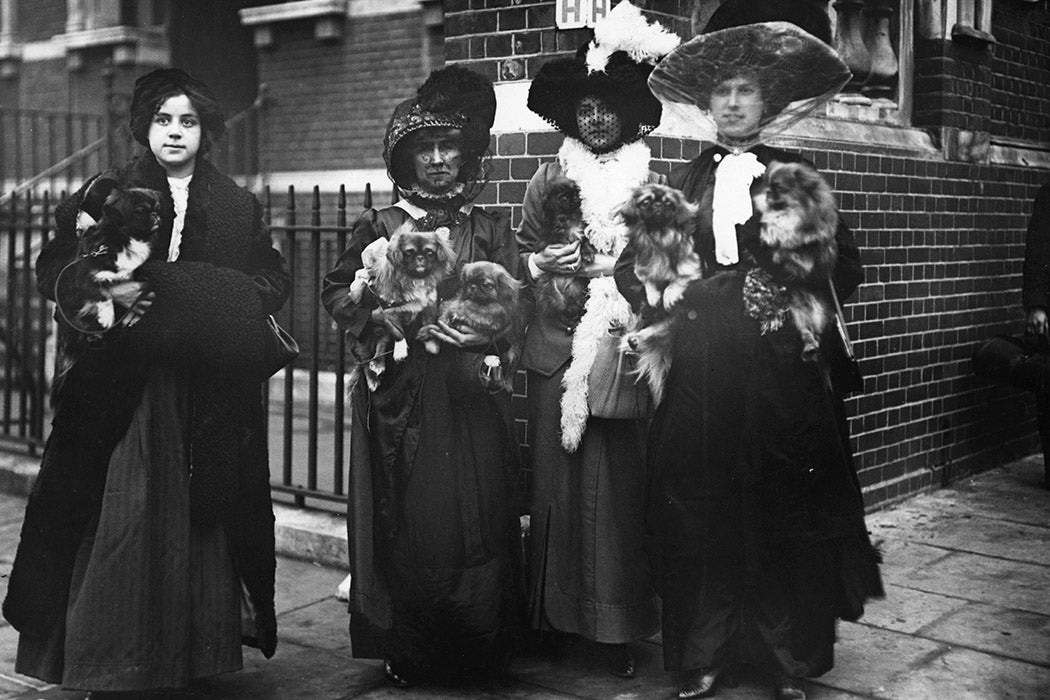
European domestication had produced floppy ears and shorter snouts — the cute look. American dogs had erect ears and longer muzzles, closer to the common ancestor they shared with wolves.
They were also skilled hunters, living in Indigenous communities as companions, guards and hunting partners.
But the English settlers would not accept that Indigenous people domesticated animals. Domestication was, in their view, an art of civilisation, and Native Americans were its opposite.
So the dogs had to be wolves: wild animals for wild people. That erased Native domestication from the record and made 'uncivilised' stick, greasing the case for dispossession.
The people 'vanished', so the dogs did too
The story worked. The Indigenous peoples of the Northeast were largely erased from the map, and genetic research shows most of the region's historical Indigenous dogs were replaced by dogs of more recent Eurasian heritage.
But just as the people were never truly extirpated, Roberts warns against writing off Indigenous dogs too quickly.
Explorers, traders and settlers carried the same prejudice west, continuing to misidentify and kill Native dogs as wild animals.
Why it matters
Calling someone's pet a wolf is not bad eyesight, it is observation with a verdict already attached: decide first that these people cannot have civilisation, then explain whatever is in front of you. The same sequence runs today whenever a group is labelled savage.

Curated from high-quality sources, with concise summaries and key takeaways.

