After touring Intel's most advanced fab, its CTO said the world's existing chipmaking equipment can at most double leading-edge output, while AI demand has been tripling every year for a decade.
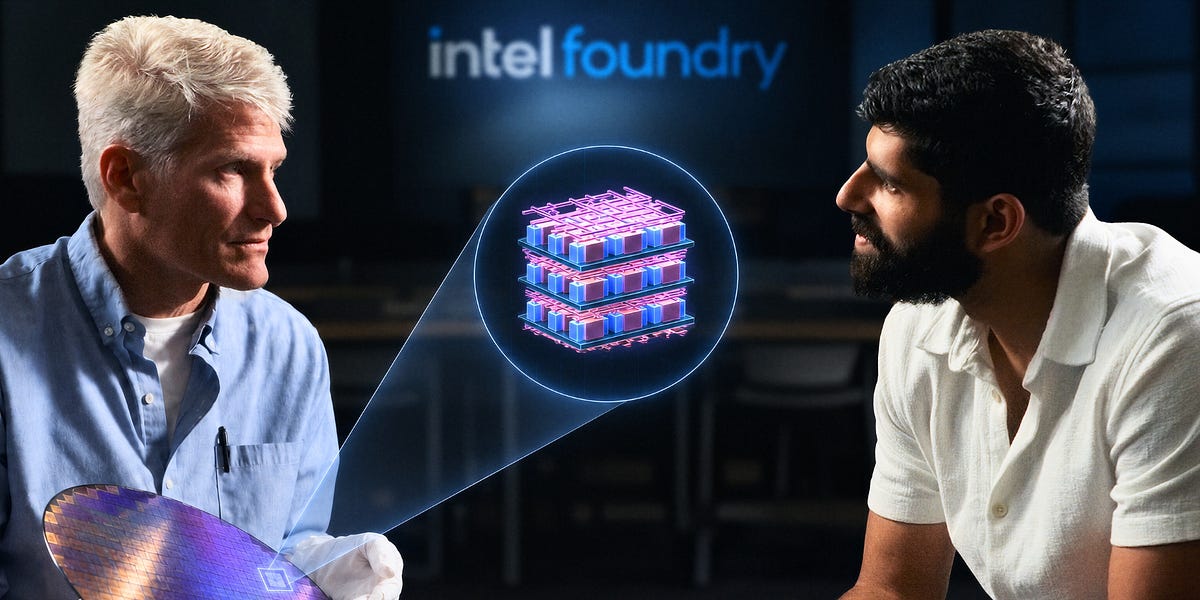
AI's appetite for compute keeps growing. The machines that make cutting-edge chips do not. That gap is now the semiconductor industry's biggest headache.
Not enough machines, and the number is fixed
AI compute has grown threefold every year for a decade. But Intel CTO Pushkar Ranade ran the numbers: with today's global stock of chipmaking tools, leading-edge capacity can at most double. Beyond that, nothing.
The tightest bottleneck is EUV lithography. Only ASML builds those machines, fewer than a hundred a year, split between TSMC, Samsung, SK Hynix and Intel itself.
A new transistor takes twenty years
To shrink chips further, the transistor has to move from flat to gate-all-around — the gate wraps the conducting channel on all four sides instead of three.
The idea was demonstrated in a lab in 1988, but Samsung did not ship it in volume until 2022. A whole generation passed, because new materials, new gases and new tools all had to be invented first.
Intel learned this the hard way: its 10-nanometer node slipped by years, and the stock fell 15% in a day. The lesson: cram too much innovation into one node and the schedule is lost.
Stacking upward instead of shrinking sideways
When shrinking gets too hard, stack. Intel is studying CFET, which places two types of transistor directly on top of each other, fitting twice as many into the same area.
Connections between chips are densifying too. Hybrid bonding fuses copper wires on two chips directly, no solder bumps, with pitches already demonstrated at 0.45 microns — a few hundred times denser than fifteen years ago.
The bottleneck is machines, not money
Intel's capex is about $20 billion a year; TSMC's is $50 billion. But even with unlimited money, tools take 18 months to arrive and a new fab takes years to build. The capacity for 2030 is essentially locked in today.
Ranade said his CTO openly admits that, knowing what they know now, they should have bought more equipment a year ago.
AI labs can throw money at entire fabs. But the machines that make chips, the world only builds so many of them a year.
Why it matters
What limits AI may no longer be money but how many machines the world can build in a year. When model companies can buy up a whole fab's output, competition shifts from who has the best algorithm to who locks down the equipment — and tool lead times mean the 2030 compute ceiling is already set.


Curated from high-quality sources, with concise summaries and key takeaways.

