Daily Picks

Economics & Policy

Economics & Policy

Macro, jobs, trade, housing, energy and public policy — how a society allocates, and how it is governed

Noema Magazine
A population 30% smaller and 30% less work could balance outThe author proposes a '30/30 equilibrium': if advanced populations shrink by about 30% this century while AI and robotics cut labour demand by a similar amount, the two may offset each other.
Klement on Investing
China is decoupling too, and the West is losing the markets firstEconomists at the Bank of Finland split the world into Western and Eastern blocs by how each country treats Taiwan, and found China's import sources shifted sharply from the US, Germany and Japan toward Brazil and Russia between 2015 and 2025.
Blood in the Machine
41 data-center ballots, 40 said noIn the US midterms, 40 of 41 ballot measures targeting data centers passed, halting, freezing or outright banning them, and candidates backed by AI lobbying groups lost across several states.
The Conversation
Trump's midterms: worst defeat in 50 years, and then?Republicans lost Senate seats in deep-red states like Texas and South Carolina and even seats they had gerrymandered, a defeat the article calls their worst in 50 years.
The Atlantic · Technology
America can't quit AI, even if it's a parasiteThe five largest AI data-center companies are set to spend $900 billion in 2026, with AI investment possibly exceeding 8 percent of U.S. GDP, while profits elsewhere are flat and private construction outside tech is collapsing.
Klement on Investing
Women may lose at work by saying it was nothingIn an experiment, 350 people rated their own test scores and 1,750 advisers judged them; men guessed high, women said it was nothing, and only 31% of women were recommended a harder task.
ChinAI
Why Chinese readers keep saying it's harder to make moneyA translated essay reposted by Huxiu and read more than 100,000 times uses three ordinary lives to explain the feeling that making money in China keeps getting harder.
East is Read
What the PBOC still needs to make the renminbi a currency people holdPBOC Deputy Governor Tao Ling acknowledged that although the renminbi's share of settlement has grown, a smooth cycle of international use has yet to take shape, and set out three policy directions.
East is Read
The IMF Got China's Diagnosis Right and Its Prescription WrongCASS economist Zhang Ming accepts the IMF's findings on weak consumption, local government debt and falling investment returns, but rejects convergence toward the structure of mature Western economies as the goal of reform.
Noema Magazine
Germany is running laws like beta softwareFacing climate change, biological threats and AI that move faster than legislatures, Germany uses experimental clauses with an expiry date, a clear boundary and mandatory evaluation to test rules in the real world before legislating.
Of Dollars And Data
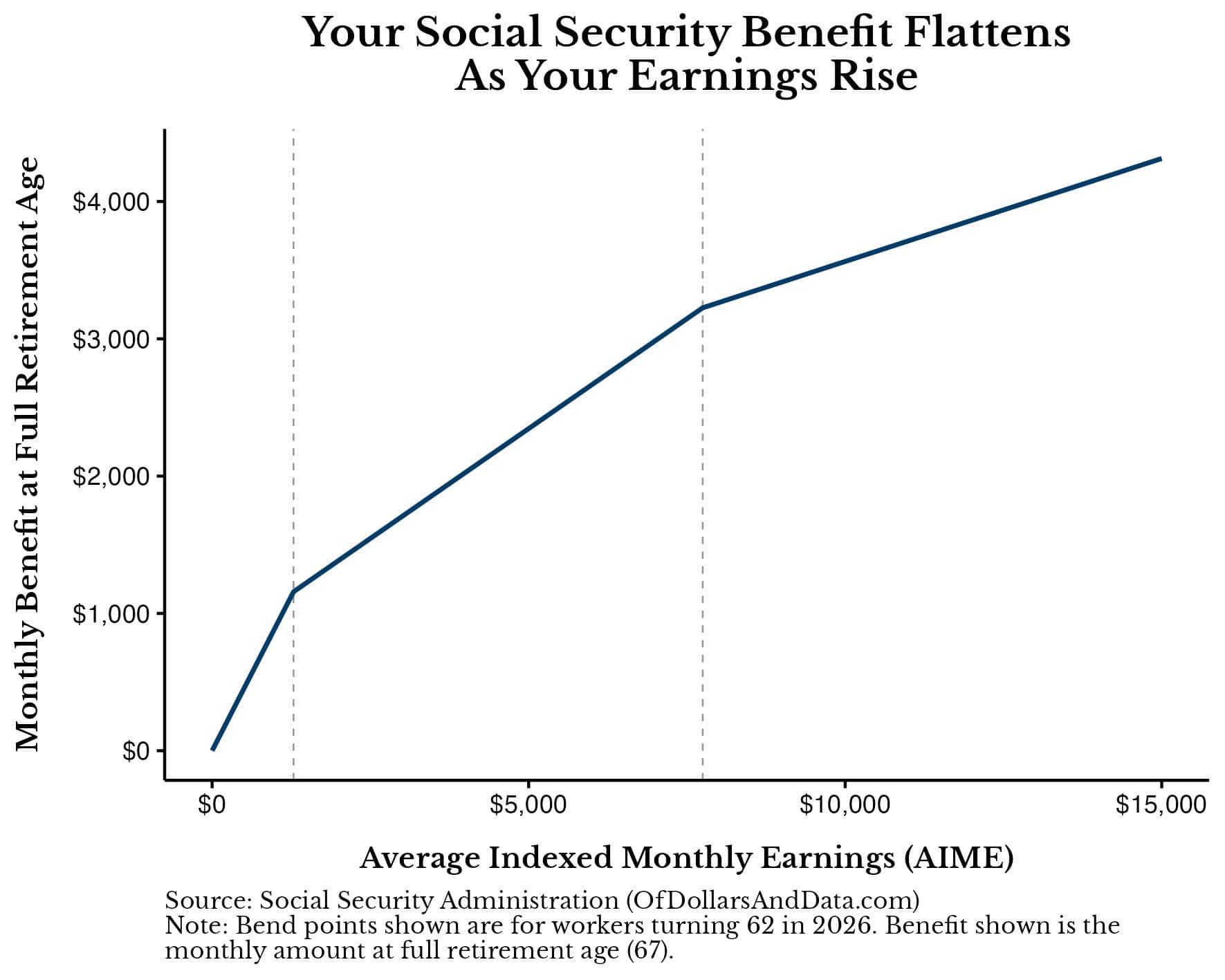
Social Security won't vanish, but don't count on the full checkThe US retirement trust fund is projected to run dry in 2032, yet payroll taxes would still cover about 78% of scheduled benefits, not zero.
Our World in Data
One-Fifth of Global Development Aid Has a Climate TagAn analysis of the RioMarkers database by Our World in Data finds that nearly one-fifth of the roughly $210 billion in bilateral development aid in 2024 was classified as climate-related.
Klement on Investing
Germany isn't just losing on priceThe Kiel Institute compared third-market shares in 2012-14 and 2022-24 and found Germany shedding share faster than the European average in cars, machinery and electrical equipment, while Chinese firms gained across the board.
Apricitas Economics
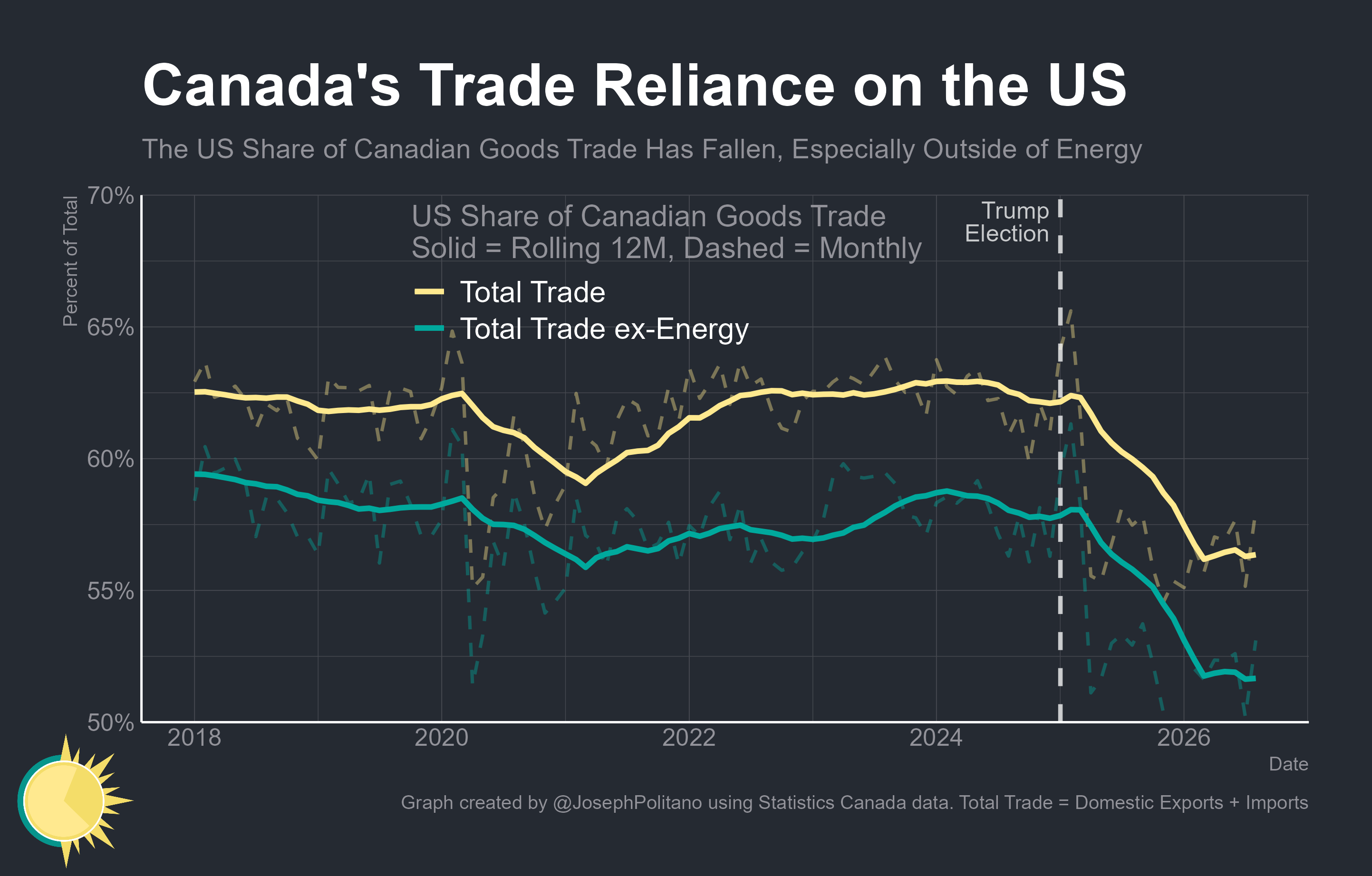
Canada's trade with the US falls to a 30-year lowUnder Trump's tariffs and annexation threats, Canada's share of trade with the US has sunk to its lowest in more than 30 years, while non-US exports jumped over 40% in a year — though America remains eight times larger than its next partner.
The Conversation
Lula wins a 'miracle' election; the hard part starts nowBrazil's President Lula overturned a roughly 2.2-million-vote first-round deficit in three weeks to defeat far-right candidate Flávio Bolsonaro and secure a fourth non-consecutive term.

Other topics