Daily Picks

Investing

Investing

Asset prices, valuation, portfolio reasoning, and where financial theory breaks down

Klement on Investing
Strip out luck and style, and AI's stock-picking edge nearly vanishesA Tsinghua team had ten large models trade China's stock market for about 16 months. Once style exposure was stripped out, only Claude Opus 4.7 kept a positive excess return, at 0.2%; the rest were negative.
Klement on Investing
Buying 30-year US Treasuries is a bet on AI productivityA KfW study estimates that if AI lifts productivity by an extra 0.4% a year, the US debt-to-GDP ratio could fall from 185% to 113% by 2056.
硅谷居士
Two reclassifications shaved a big slice off S&P 500 tech weightThe S&P 500's IT sector weighs 39.7%, but two classification changes in 2018 and 2023 moved Google, Meta and Visa out; the author estimates it would be about 55% without them.
硅谷居士
Tech is nearly 40% of the S&P 500As of the end of September 2026, information technology made up 39.7% of the S&P 500, up about five points in a year, with the other ten sectors sharing barely over 60%.
硅谷居士
A Tsinghua PhD rewrote classical Chinese verse as a lament for A-sharesA Silicon Valley engineer with decades of US stock experience rewrote more than a dozen classical Chinese poems into jokes about A-shares and retail investors — and the laughs map a gap between two market experiences.
Where’s Your Ed At
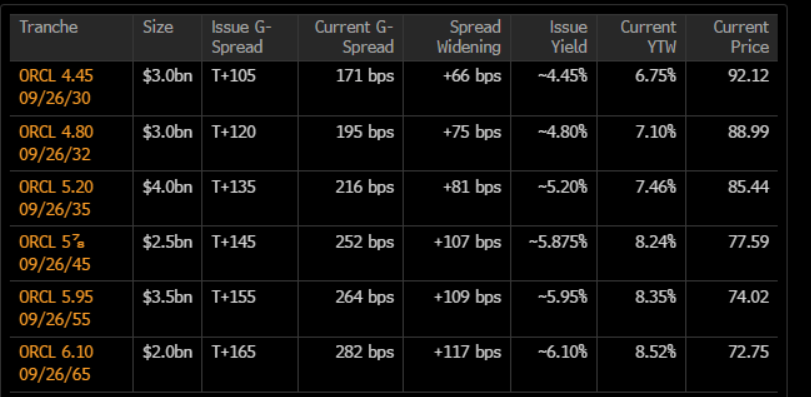
OpenAI and Anthropic May Be Rated CCCBuilding AI data centers takes hundreds of billions in borrowed money, and most of the borrowers have no revenue, no credit, and nothing but their proximity to Nvidia or a hyperscaler to vouch for them.
Net Interest
He bought a share of Liverpool, and sold the part that matteredThe author bought a single Liverpool share for £1,950 in 1996, doubled his money in months and sold; eleven years later shares went for £5,000, but what he really gave up was the lifetime priority ticket rights.
硅谷居士
Same stocks, same decade: US up 13%, China down 10%Through the first nine months of 2026 the S&P 500 gained 13.4% while the CSI 300 lost 9.8%, a 23-point gap the author uses to renew his case for abandoning Chinese stocks.
Musings on Markets
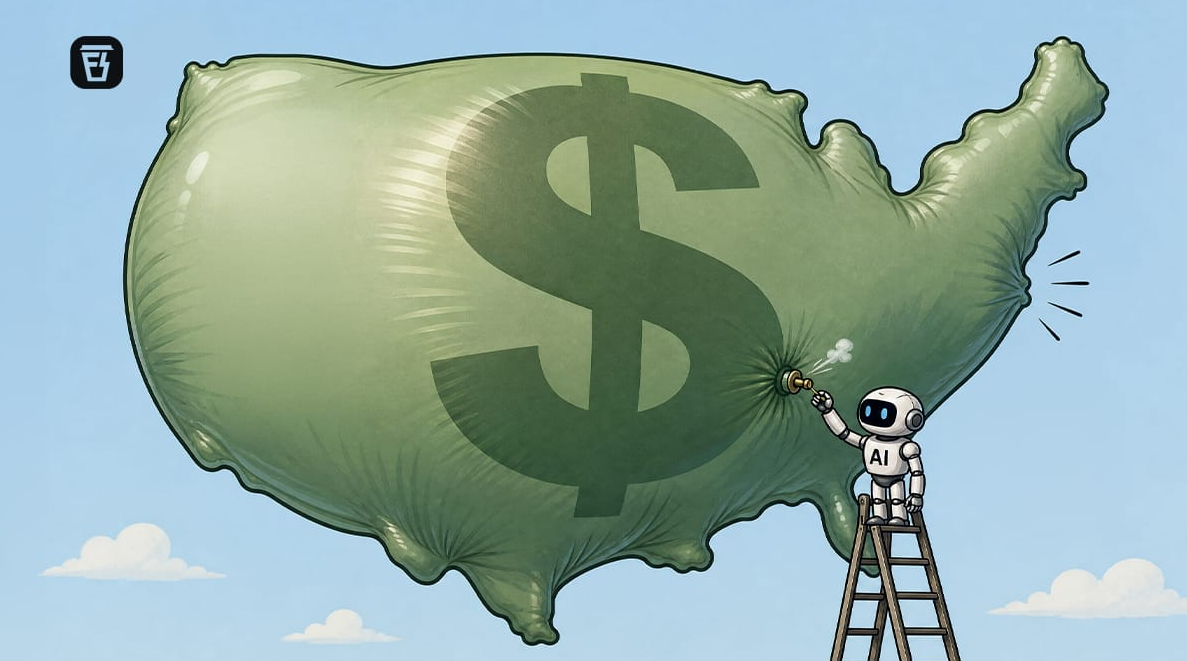
A year of AI spending: has the payoff shown up in earnings yet?Much of the 2026 surge in US corporate profits was one company's chip-and-datacenter bill becoming another company's revenue, not new money actually earned.
Where’s Your Ed At
The day OpenAI goes public, it becomes history's biggest junk borrowerOnce Anthropic and OpenAI list, they will need at least $50 billion of debt a year, and their actual finances point only to a junk rating.
硅谷居士
If you can't beat the index, stop tryingIn the first nine months of 2026, the semiconductor fund SMH returned 75.1% and tech fund VGT 36.7%, while gold fell 4.1% and the S&P 500 managed 13.8%.
Klement on Investing
Compress the filing to 20 bullet points and the AI flips its callResearchers had an AI read a full earnings filing, then had it judge a 20-point summary of the same text: the buy or sell call flipped on a quarter to a third of the stocks.
硅谷居士
The loudest brokers manage a rounding error next to BlackRockFutu, Robinhood and Webull dominate Chinese-language finance chatter online, yet they manage 94, 39 and 600 times less money than BlackRock respectively.
Klement on Investing
Bigger index funds make active managers worseAfter passive funds overtook active ones in the US in 2020, active funds' gross alpha turned from positive to negative around 2010, and a researcher argues that redemption flows pushing against active bets explain part of it.
Early Retirement Now
The 4% Rule's inventor says you can take 5.5%. The math says otherwise.Bill Bengen, who wrote the first serious paper on retirement withdrawal rates, now recommends splitting equities five ways and claims a 4.7% to 5.5% safe withdrawal rate; re-run on twenty years of real ETF data, the portfolio adds risk instead of removing it, and the higher rate rests almost entirely on a small-cap premium that was arbitraged away decades ago.

Other topics