Daily Picks

Science & Health

Science & Health

Medicine, psychology, biology, physics, space and statistics — what a study actually found, and whether it replicates


JSTOR Daily
How Kudzu Was Supposed to Save the SouthKudzu was once seen as the South's savior, but after agriculture changed, it was abandoned and demonized as an invader.
JSTOR Daily
Works in Progress
The kill switch for harmful genesThrough siRNA technology, humans can precisely switch off specific disease-causing genes, which may usher in a new era of treating many intractable diseases.
Works in Progress
Quanta Magazine
A New Framework for How the Brain Compresses Our Noisy WorldThe brain does not passively receive the world and file it away; it actively projects categories onto the world based on the body's immediate energetic needs.
Quanta Magazine
JSTOR Daily
Not All Boredom Is the SameBoredom has two distinct causes—lack of meaning and a mismatch of attention—and only treating the right one actually relieves it.
JSTOR Daily
Klement on Investing
Let the climate wars beginHigh climate risk and high conflict risk overlap heavily, and climate change is increasing the risk of war.
Klement on Investing
Nautilus
Here’s Where Our Memories Go as We AgeAge-related memory loss is not simply decline: memories shift from vivid, detailed episodes to more generalized, semantic summaries.
Nautilus
Nautilus
Are You in Danger of Becoming a Robot?Frequent interaction with social robots can subtly reshape people's expression and identity to fit AI's capabilities, resulting in a diminished sense of personhood.
Nautilus
Quanta Magazine
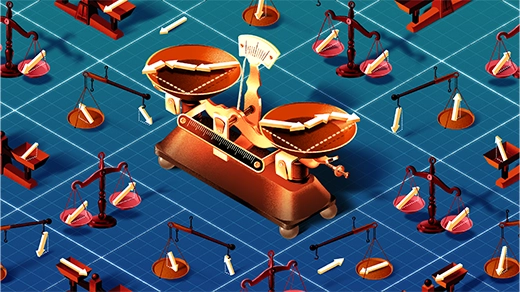
‘Huge Breakthrough’ in the Math of ImbalanceComputer scientists have made the first major advance in 30 years on the Komlós conjecture, showing that even with huge numbers of objects and attributes, imbalance can be kept almost constant.
Quanta Magazine
Nautilus
Why Human Giants Defy the Laws of PhysicsHuman giants are physically impossible, because when a body is scaled up, its weight grows as the cube while bone strength only grows as the square, so the body crushes itself.
Nautilus
Quanta Magazine
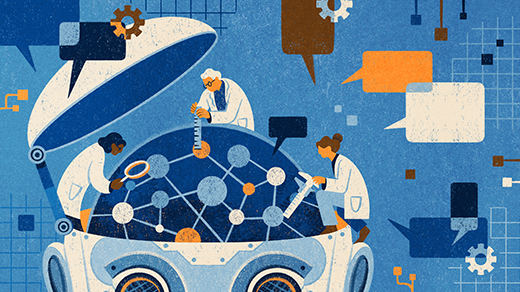
Are We Thinking Correctly About AI Intelligence?AI reasoning is often fake: models can score high on benchmarks without understanding, and the field lacks reliable ways to measure machine cognition.
Quanta Magazine
Nautilus
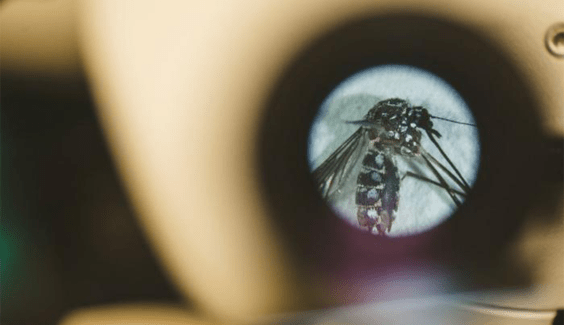
You’re Not a Universal Mosquito MagnetNo one attracts every mosquito species, but everyone attracts at least one, determined by skin microbiome odor.
Nautilus
Nautilus
How Listening to Ocean Waves Can Predict Volcanic EruptionsBy measuring how the speed of ocean wave sounds changes as they travel through volcanic rock, scientists can predict volcanic eruptions in advance.
Nautilus

Other topics